From prototype sketch to a defined cable item
If your team is selecting a cable while developing a new assembly, give the cable its own item reference early in the inquiry. Use DC3.5 × 1.35 mm male to identify the connector required on this page. Beside that identity, state the intended mating part and the current drawing revision. Mark provisional details clearly, so your buyer knows which requirements are ready to quote and which still need an engineering decision.
Consider dividing the brief into interface, route and termination decisions. The interface decision identifies the mating connection. The route decision describes where the cable must go inside or around the assembly. The termination decision explains what your team wants at the wire end. Work through these questions together, then combine the agreed choices into the description used for the quotation.
A prototype photograph can help explain the project, but label it with the purpose of the view. Is it showing the intended connector position, a temporary wire route or an appearance preference? Put those labels directly on the image or in a short keyed note. Request a proposed cable drawing that your team can compare with the latest assembly revision, rather than approving from a photograph alone.
DC35135 male identity and series choices
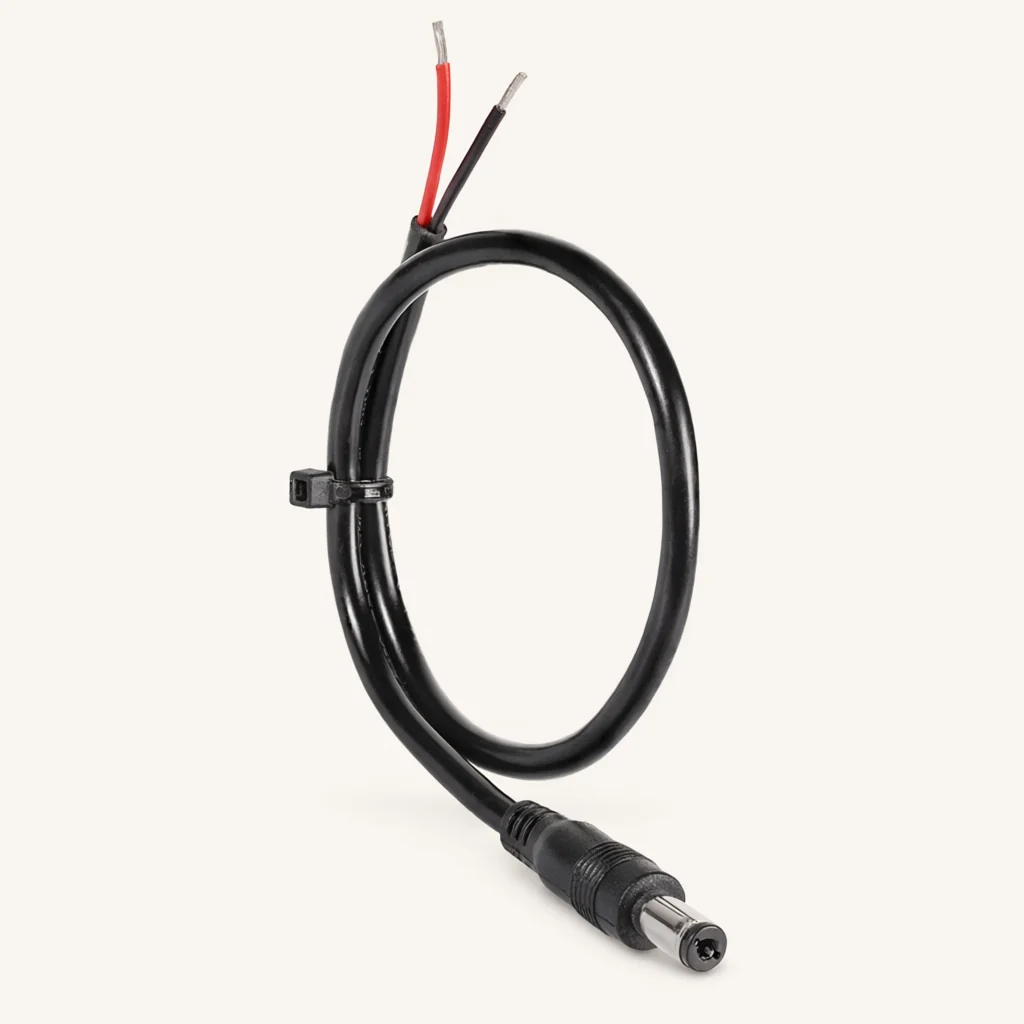
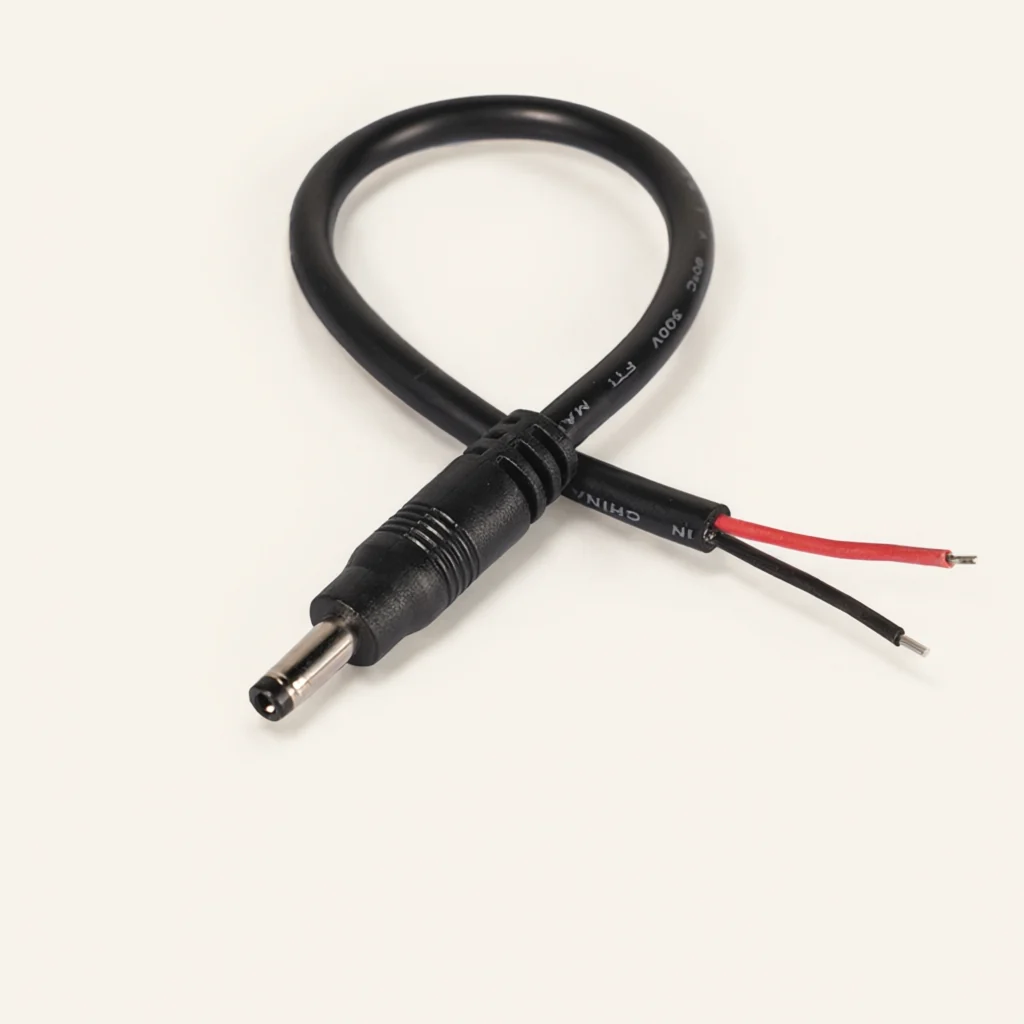
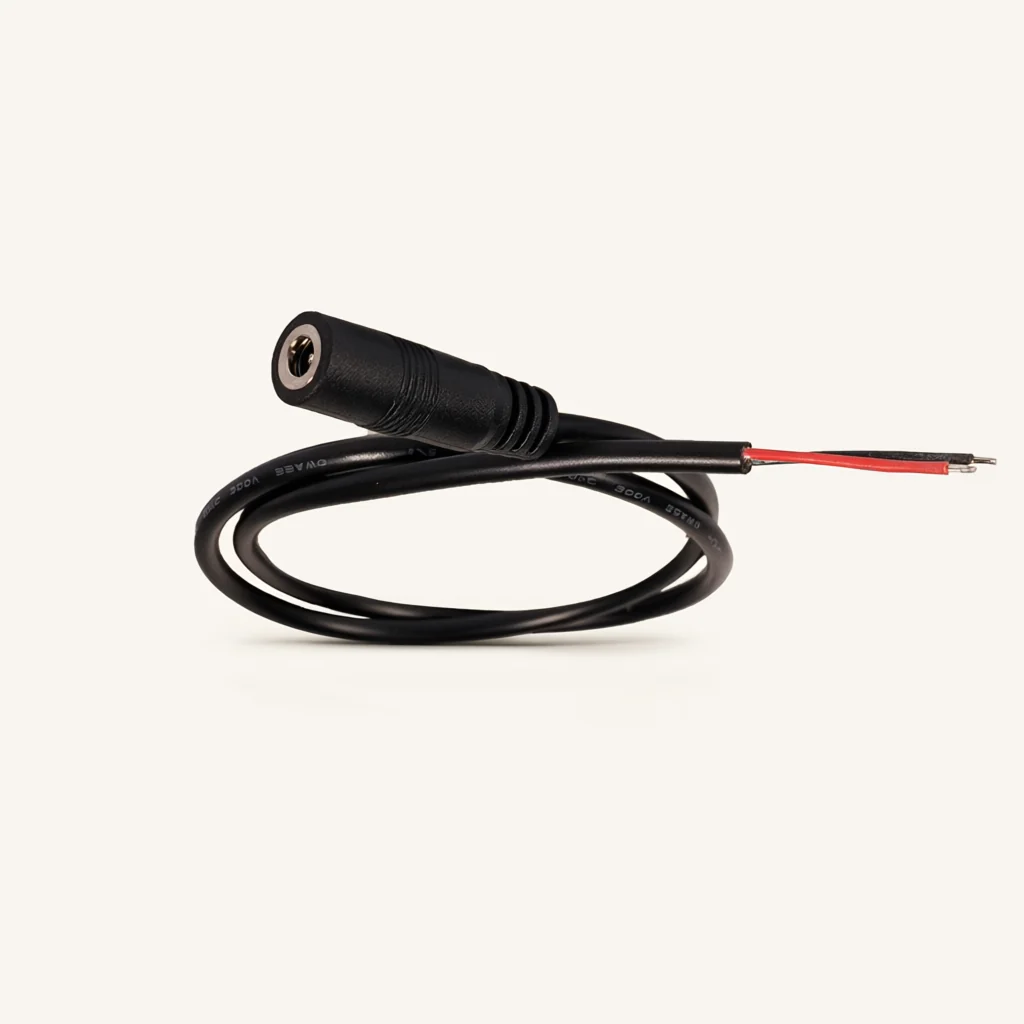
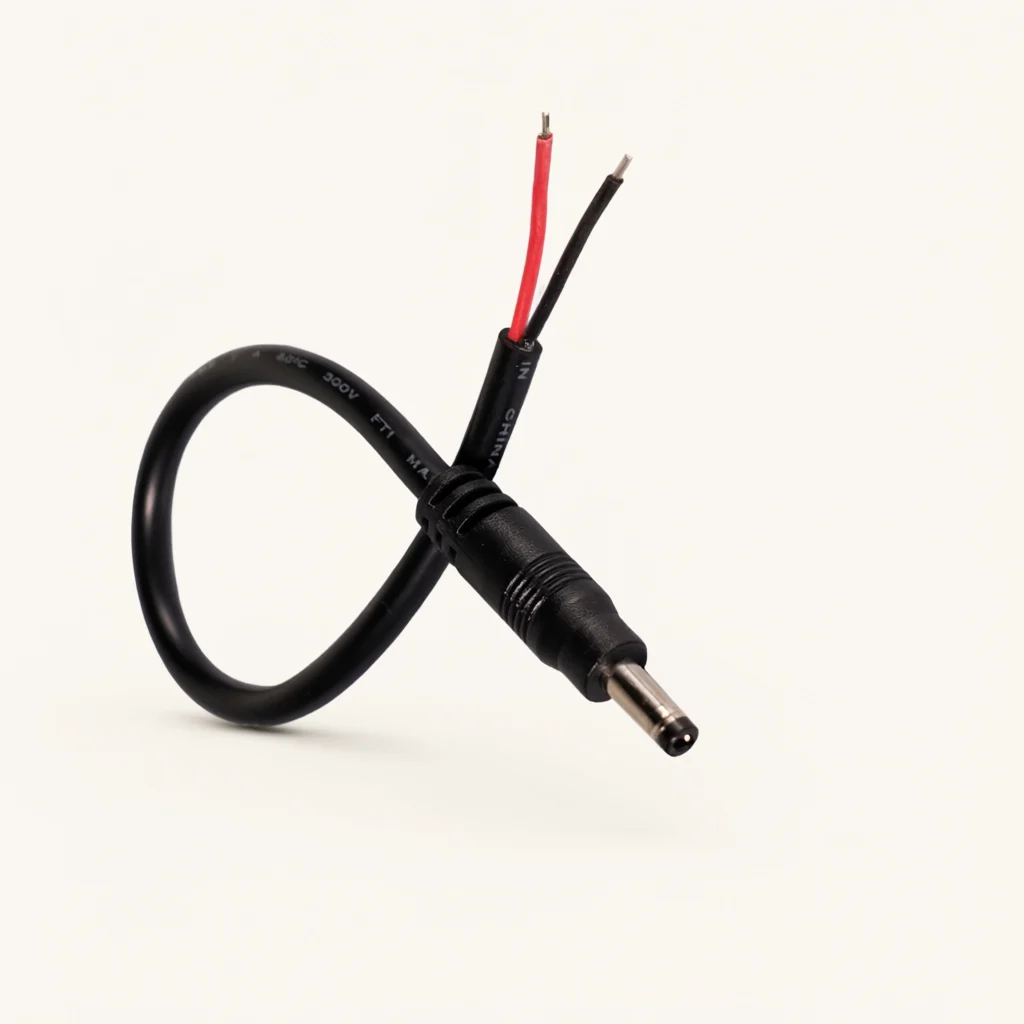
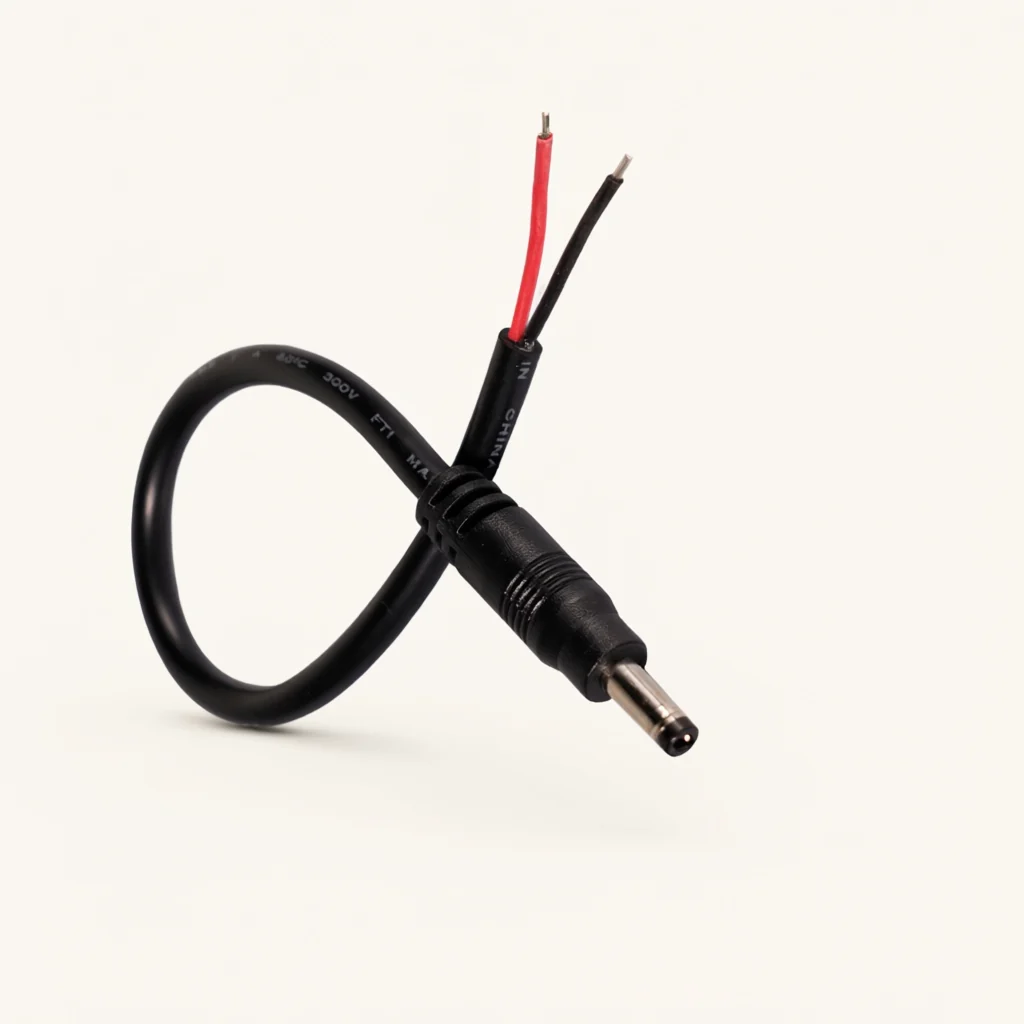
The product specification identifies a DC3.5 × 1.35 mm male connector. The DC single-ended range includes this configuration and lists cable lengths of 20, 50, 100, 150, 200, 300 and 500 cm, together with customized lengths. Select the length required by your drawing and ask for the complete configuration to be included in the quotation.
Black or a customized color and PVC or rubber outer sheath options are listed for the series. The listed customization scope also includes connector type and packaging method. These options give you choices to discuss while the design is taking shape. Convert the choices into a selected specification before placing an order, including any requirements your team needs to review for the proposed material.
For a design review, a short comparison can be more useful than a long list of alternatives. Identify your preferred length, sheath and color in one column, and place any alternative you want quoted in another. State why the decision remains open: for example, a route awaiting approval or an appearance reference awaiting selection. Keep the connector identity fixed unless your engineering team is also reviewing the interface itself.
| Item | Series information |
|---|---|
| Connector identity | DC3.5 × 1.35 mm male |
| Cable lengths | 20 / 50 / 100 / 150 / 200 / 300 / 500 cm or customized |
| Color | Black or customized |
| Outer sheath | PVC or rubber |
| Customization | Length, connector type, sheath color or material, packaging method |
Put the mating part in the design review
Ask your engineering team to identify the complete mating-part reference, not just the equipment name. Include the drawing or specification that describes the connection it expects. Request the additional dimensions needed to compare the proposed male connector with that reference. Keep the nominal product identity and the full connector drawing together in the inquiry.
On your assembly sketch, mark the area around the connection. Which nearby features should be included in the clearance review? How will an operator reach the connection during assembly? Is the connector position fixed, or is it still part of the layout discussion? Answer these questions for your intended product and ask for any missing cable dimensions needed to complete that review.
If the mating part is controlled by another team, agree which document will govern the interface. A useful inquiry note might say, 'Please review the proposed DC35135 male connector against the mating-part drawing linked below; the enclosure layout is still provisional.' This is an example of a buyer's request, not a completed configuration. Replace the document references and status with those of your actual project.
Choose a cable length with the assembly sequence in mind
Sketch the route from the male connector to the intended wire-end connection. Then identify the position used while the assembly is open and the position required when it is complete. Ask your team whether the same length accommodates its planned process, and show any allowance it wants considered. Keep those decisions in the drawing instead of relying on a general request for extra cable.
State exactly where the length should be measured. Mark the endpoints and specify the tolerance your team requires. Where the route is still being developed, give the length a provisional status and indicate when your team expects to finalize it. Ask for a quotation that distinguishes a selected length from an alternative still under discussion.
The series offers custom lengths alongside the published options. Use that scope to submit the dimension established by your layout, rather than choosing a listed number without reviewing the route. For a prototype and a later assembly version, identify each requested length separately. Keep a record of which version your sample request or quotation refers to.
Define the wire end and connection map
Write down how you intend to connect the wire end in your assembly. If your process calls for a particular preparation, describe it and ask what can be supplied for the proposed cable. Provide dimensions and references for any termination requested. Where a detail is not yet decided, name the decision required rather than leaving an unmarked blank on the drawing.
Prepare a contact-to-wire map with a stated viewing direction. Ask your engineering team to approve that map together with the intended polarity and any identification requirement. Keep wire identification separate from the selected outer sheath color. If your team uses its own connection labels, explain those labels in the inquiry so the drawing can be reviewed without guessing their meaning.
Include the intended electrical requirements and any documents your project needs. Request a proposal for the complete cable configuration against those inputs. The connector designation is the starting identity for this product; your approved order description should also record the requirements your team has established for the finished assembly.
Prepare a useful prototype quotation request
Begin your request with the current design status. Tell us whether you are seeking an initial configuration discussion, a sample proposal or a quotation against a released drawing. Give the requested quantity for the stage you are discussing. If you also want a later quantity considered, list it separately and explain which specifications may still change.
Next, identify the connector, selected length and sheath choices. Include a drawing link in the inquiry message or email the specification. The customization page provides a route to describe the choices you want discussed. Use a short open-questions list for anything your engineering team still needs to resolve, with a drawing reference beside each question.
Finally, describe the packaging method you want considered and any identification you need for your review. The series lists packaging customization, so include your preferred arrangement in the quotation request. State your requested schedule as a question for confirmation. Keep technical and commercial decisions visible in the same request without treating an early discussion as a purchase approval.
Keep design alternatives identifiable
If your project is comparing different cable proposals, give each proposal a unique name and list the requirement that changes. Review those proposals against the same mating-part reference where appropriate. When your team selects one, record the decision and remove superseded alternatives from the purchasing brief. A later buyer should be able to see which configuration was selected without reconstructing the design discussion from old messages. Include the chosen proposal reference in your quotation request and identify any remaining decision separately.
Review the proposed cable before releasing the drawing
When you review a proposed sample or drawing, use the current assembly reference and record the version reviewed. Ask your team to consider the mating interface, the cable route, the wire-end preparation and the selected appearance. Identify the person responsible for each open decision. If a dimension changes, record whether it affects the cable drawing, assembly drawing or both.
Prepare your acceptance criteria before making the final purchasing decision. Describe any dimensional review, connection checks or documentation your project requires and discuss the arrangement with the proposed supply. Record the result against the requirement it addresses. A clear review record should show which details were accepted and which require an updated proposal.
For the final inquiry, browse the DC cable catalog if you need to revisit the product identity, then contact Huajunxin with the selected DC35135 male specification. Ask for the quoted configuration, quantity, packaging and timing to be confirmed together. Retain the agreed drawing revision as the reference for any subsequent change or repeat request.
Frequently asked questions
Which connector does this page identify?
This product is identified as a DC3.5 × 1.35 mm male pigtail within the DC single-ended series. Share the mating-part reference and request the full dimensions your team needs for its interface review.
Can the cable length be selected while my layout is still provisional?
You can discuss the series lengths or a custom length during the inquiry. Mark a provisional dimension clearly, show its measurement endpoints and identify the decision required before the order specification can be finalized.
What sheath and color options can I discuss?
The series lists PVC or rubber outer sheath options, with black or a customized color. Select your preferred combination and state the project requirements you want considered when the proposed configuration is reviewed.
How can I send the prototype requirements?
Share a drawing link in your inquiry or email the specification. Include the current revision, requested quantity, chosen options and a concise list of open questions. Describe which stage of the project the request concerns.