Replacing an existing cable? Separate the reference from the request
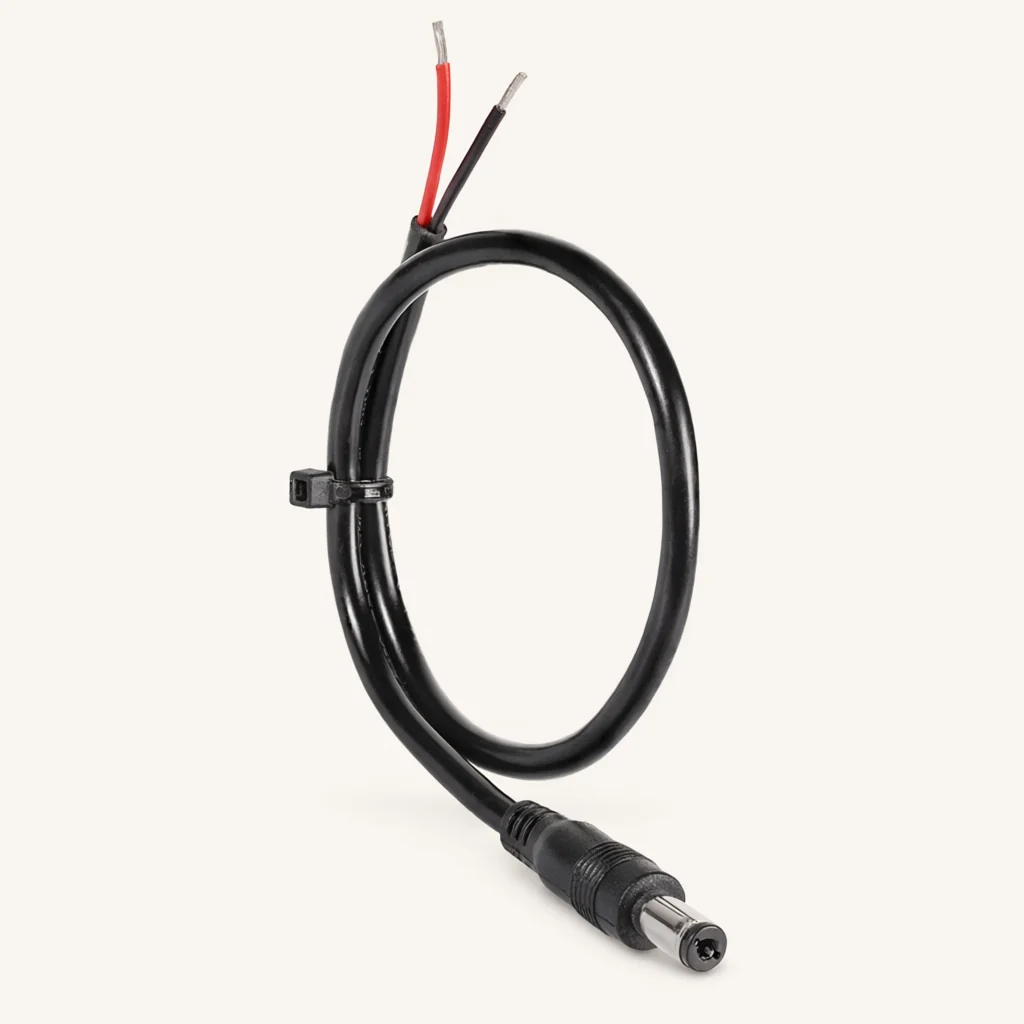
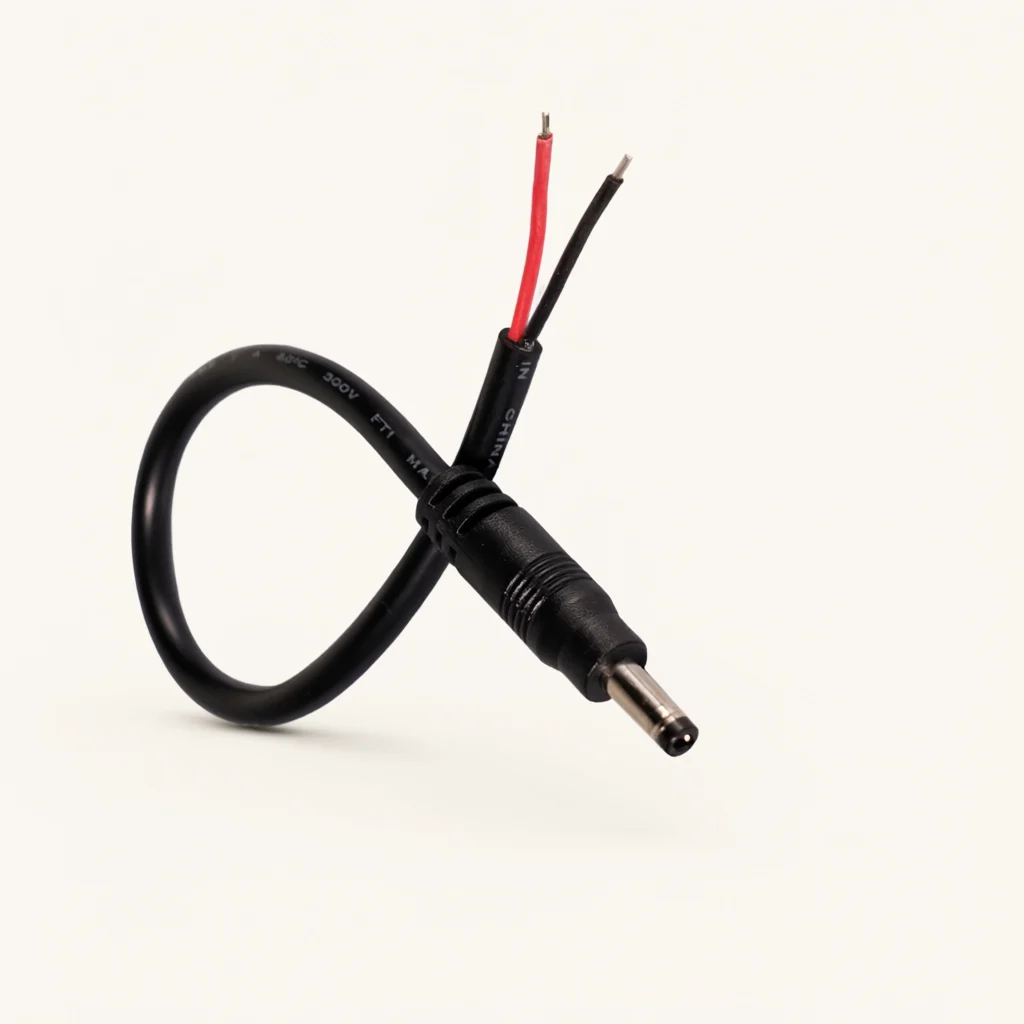
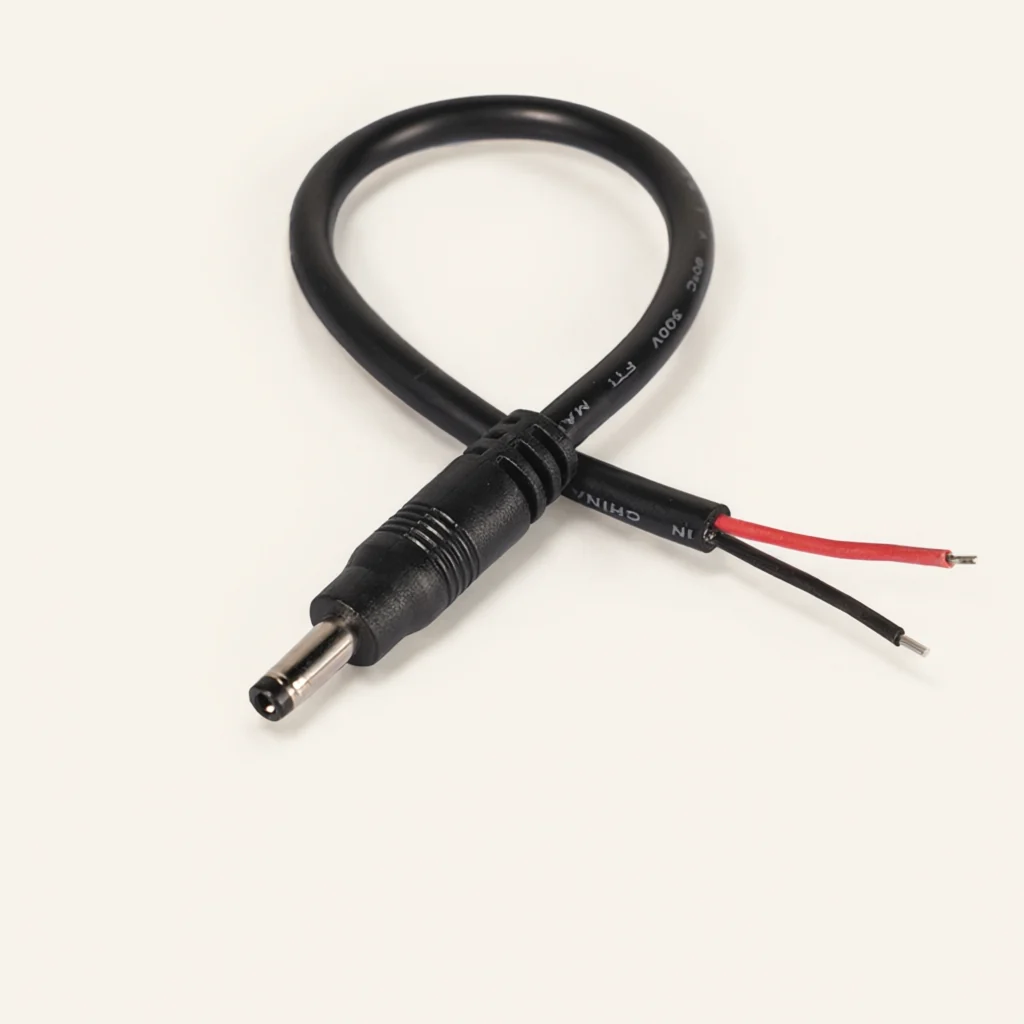
For a repeat assembly or a revised equipment design, treat your existing cable as a reference to describe, not a complete specification to assume. Identify the connector as DC4.0 × 1.7 mm male if that is what your project requires. Then list the features you want preserved: the connection arrangement, the length convention, the cable appearance and the preparation at the wire end. Ask for each relevant feature to be confirmed in the proposed supply.
Make a second list for requested changes. Perhaps your layout calls for another length, or your purchasing brief asks for a different sheath color. Those are requests to evaluate, not details to leave hidden in a photograph. Label the existing item and the requested item separately, and make clear which drawing or marked image takes precedence if your attachments disagree.
If you do not have a drawing, send clear views of the connector, cable and wire end, together with the mating-part information you do have. Ask which additional dimensions are needed. Keep any unknown dimension marked as unknown until it is resolved. A guessed dimension should not become an approved requirement simply because it was included in an early inquiry.
For a replacement project with several reference cables, label each photograph with your own item identifier. Ask the person preparing the inquiry to check those labels against the drawing filenames before sending them. If one cable is only an example of the appearance you want, say that explicitly and identify the document that defines the actual connection. Keep requested changes in a separate note tied to the intended item. Your purchasing team can then ask for a specific alternative without leaving the supplier to choose between conflicting photographs, dimensions or descriptions.
Confirm the DC4017 male interface before choosing the cable
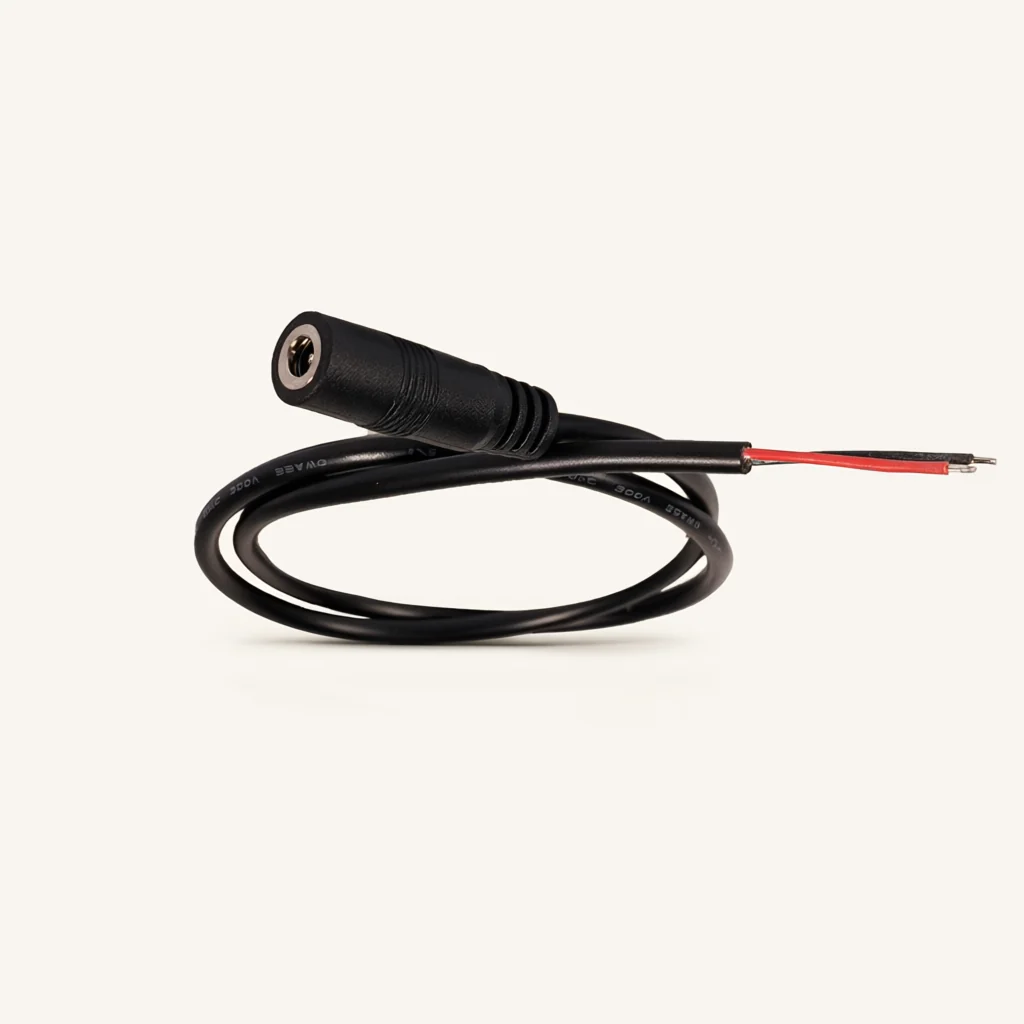
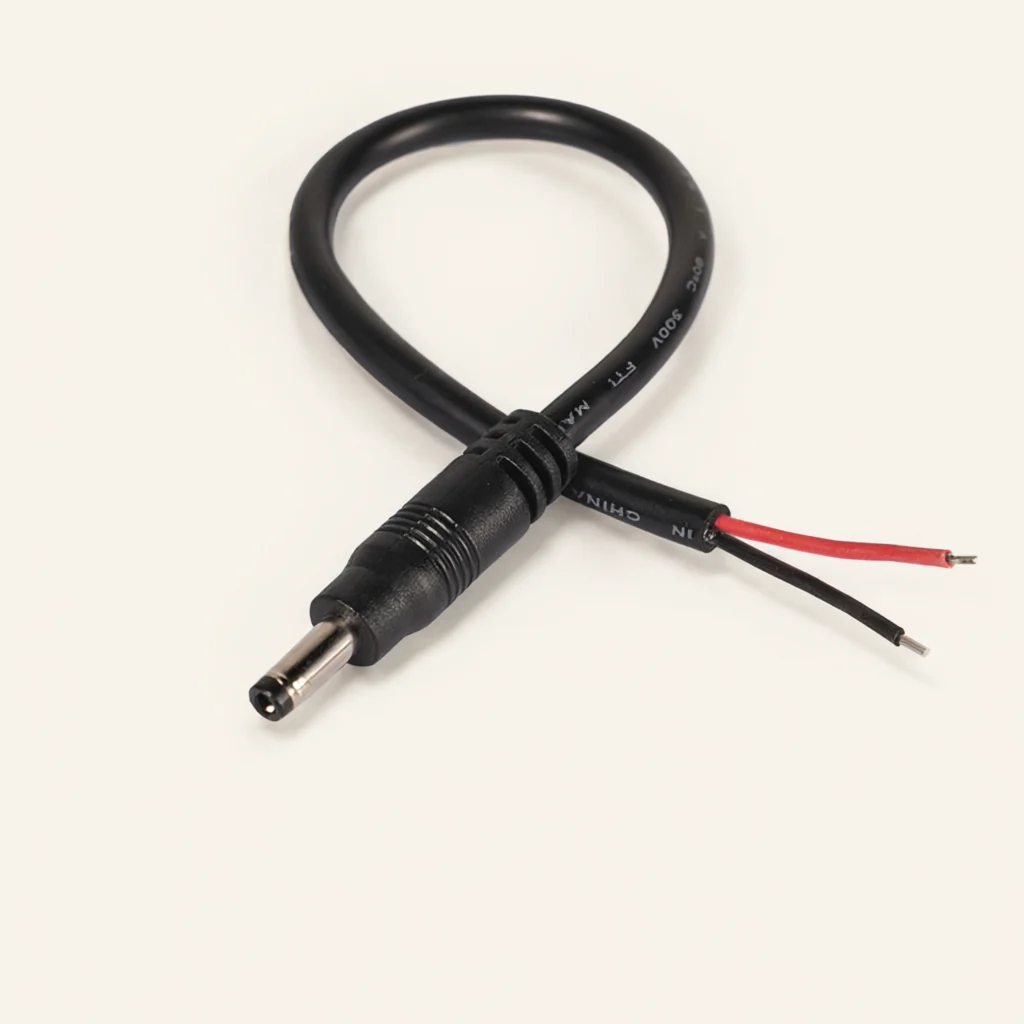
This page identifies the male DC4017 pigtail. The corresponding product specification names a DC4.0 × 1.7 mm male connector, and the published single-ended series includes that connector identity. Ask for the complete connector drawing needed by your assembly team; the designation on its own should not stand in for every dimension of the proposed part.
Put your mating interface at the center of the review. What part will receive the male connector? Which drawing revision describes that part? Are there surrounding features that your team needs to check for clearance or access? Mark the relevant area on your equipment drawing and request confirmation of the proposed connector geometry before finalizing the cable item.
Avoid describing the requirement only by the name of a device you want to connect. Supply the connection details for that device and ask your engineering team to review the proposed combination. If you are comparing several equipment versions, identify the interface for each version individually. Treat compatibility as a question to resolve for your assembly, rather than a benefit implied by the product name.
Published series choices for your quotation brief
Huajunxin's DC single-ended series lists cable lengths of 20, 50, 100, 150, 200, 300 and 500 cm, with customized lengths also available. Black and custom colors are listed, as are PVC and rubber outer sheath options. Customization also covers connector type and packaging method. These are series choices to discuss for the DC4017 male configuration, rather than an assertion that all combinations are ready for immediate supply.
Use the table to prepare a selected configuration. If a choice remains open, mark it as an alternative for quotation and state how you intend to decide between the alternatives. For example, a color reference may need your approval, or a requested material may need further discussion against your project requirements. Keep these open decisions visible in the inquiry.
| Specification area | Identity or series choice | Inquiry detail |
|---|---|---|
| Connector identity | DC4.0 × 1.7 mm male | Attach mating-part information |
| Length choices | 20 / 50 / 100 / 150 / 200 / 300 / 500 cm or customized | Identify the required length and its reference points |
| Sheath color | Black or customized | Provide the selected color or reference |
| Outer sheath material | PVC or rubber | Request confirmation for the proposed configuration |
| Packaging | Customization listed for the series | Describe the packaging arrangement you want quoted |
Specify a length change without leaving the endpoints ambiguous
When you ask for a different cable length, show exactly where the measurement starts and ends. If you are comparing a new item with an old sample, use the same reference points for both descriptions or explain the difference. Request the tolerance needed by your assembly and ask for agreement on that tolerance in the proposed specification.
Draw the intended cable route rather than relying only on the direct distance between connections. Where must the cable enter the assembly? Where should the wire end be presented to the operator? Does your process need a temporary access position before the assembly is closed? Include these as layout questions and ask your team to establish the length required by the actual route.
For several length variants, use distinct item references. State which details should remain common and which dimension changes for each reference. You might request the same connector identity and color while leaving only length open between variants. Ask for those alternatives to be itemized, so that purchasing can compare the requested configurations without interpreting an unlabeled list of dimensions.
Define the other end as carefully as the male connector
Include the intended wire-end connection in your brief. Ask what end preparation can be supplied for your chosen construction, and identify any dimensions your assembly process needs. If a drawing uses a symbol for the termination, include its meaning or reference document. Keep a plain-language description beside the drawing when the inquiry will be reviewed by both engineering and purchasing.
Provide the intended contact assignment and polarity as a drawing requirement. State the viewing direction, identify the contacts and explain any wire identification your team expects. Ask for confirmation against the proposed configuration. Do not leave that assignment to the appearance of an existing sample or to an assumption based on cable color.
Your electrical requirements should be provided separately from the connector identity. Ask for the proposed construction to be reviewed against your intended use, and identify any supporting documentation you need. This page is a starting point for defining the cable; use the inquiry to resolve project-specific requirements before approving an item for purchase.
Build a comparison record for the old and proposed configurations
For a replacement request, consider creating a simple comparison record with three columns: current requirement, proposed configuration and your approval decision. Include connector identity, cable length, sheath choice, color and wire-end details. Add the drawing revision to the record. Leave unresolved items open rather than marking the whole cable approved while individual requirements remain undecided.
If you request a sample, tell us what the sample is intended to establish. You may want your team to review the fit with your mating part, the position along your intended route or the handling of the wire end during assembly. Define the checks and acceptance criteria your project requires. Ask which documents or confirmations can accompany the proposed sample.
After your review, record any changes as explicit requests. If the sample length is accepted but another detail needs adjustment, say so directly. Ask for the updated item description before placing the order. If your team needs a particular inspection record or test procedure included in the proposed supply, describe that requirement and ask for the arrangement to be confirmed.
- Identify the existing reference and the proposed item separately.
- Record accepted features and requested changes against one drawing revision.
- Ask for open requirements to be resolved before order approval.
- Keep your acceptance record with the final purchasing specification.
Send a request that purchasing and engineering can both review
The customization page provides a place to begin the configuration discussion. For this item, identify DC4017 male in the request and attach your existing reference, revised drawing or both. State the quantity you want quoted, your packaging preferences and any required schedule for discussion. Ask for the proposed commercial terms alongside the final cable description.
Use the product catalog to review the available product identities if your interface is still undecided. Once the configuration is clear, contact Huajunxin with the selected requirements. Separate essential requirements from preferences that could be discussed. If you need more than one alternative quoted, give each one its own name and state which features differ.
Before approving the purchase, compare the quoted description with your current drawing rather than an earlier email attachment. Confirm the selected length, sheath, color and preparation requirements as well as quantity, packaging and timing. Keep a copy of the agreed description for any future repeat inquiry, and identify subsequent changes instead of relying on a general request to repeat the previous cable.
Frequently asked questions
Is this the male or female DC4017 pigtail?
This page covers the DC4.0 × 1.7 mm male configuration. Include that identity in your inquiry and attach the mating-part information. Ask for the proposed connector dimensions to be reviewed against your drawing before approving the configuration.
Can I keep the connector identity and request another length?
The DC single-ended series lists length customization. State the connector identity you want retained, the requested length and the measurement reference points. Ask for that complete combination to be confirmed rather than treating the length list as confirmation of a finished order.
How should I request a color or sheath change?
The series lists black or customized color and PVC or rubber outer sheath options. Identify the requested choice, include any color reference and state the requirements your team needs considered. Ask for confirmation of the selected combination in the quotation.
Does a reference photograph establish compatibility?
Use a photograph to explain your request, but also provide the mating-part information and required connection details. Ask your engineering team to review the proposed cable for the assembly. Treat any unresolved fit, wiring or application question as an item to confirm before ordering.
Product-series references
Huajunxin DC single-ended connector series ↗Huajunxin manufacturer overview ↗