Organize cable choices across an equipment range
For a project with more than one equipment version, begin by listing which versions require a DC5525 male-to-female cable. Give each requested item a reference and link it to the applicable equipment drawing. State which requirements are shared and which differ. This helps your team review the proposed cables as defined items instead of an unlabeled collection of length and color options.
Ask the engineering owner of each version to identify its mating interfaces. Keep a male-end reference and a female-end reference for each item, even when your team expects them to be common across the range. Request the proposed connector dimensions needed for review. Retain DC5525 as the product designation and establish the complete geometry through the cable drawing.
If one equipment version is still being developed, mark its cable requirement as provisional. Separate it from the configurations ready for quotation against a released drawing. Your inquiry can include both, provided the status of each item is clear and the proposed supply is described against the appropriate reference.
Use an option matrix with a selected item in each row
Prepare a matrix containing your item reference, equipment version, male interface, female interface, length, color, jacket requirement and requested quantity. Fill each row with the requirement for one proposed cable. Where a decision is open, describe the question in that cell or a linked note rather than filling it with a guessed value.
For example, your purchasing brief can state, 'Please quote each row as a separate DC5525 male-to-female configuration and identify any requirement that needs clarification before the proposal is finalized.' This is a suggested inquiry format, not a specification of a supplied item. Add your own references and selected options to make the request concrete.
Keep optional alternatives outside the primary rows. If you would like a different packaging method compared, identify the item it applies to and the change you want considered. If an alternative cable choice is selected later, update the relevant row and drawing reference before approving the order.
Published choices for the DC5525 male-to-female series
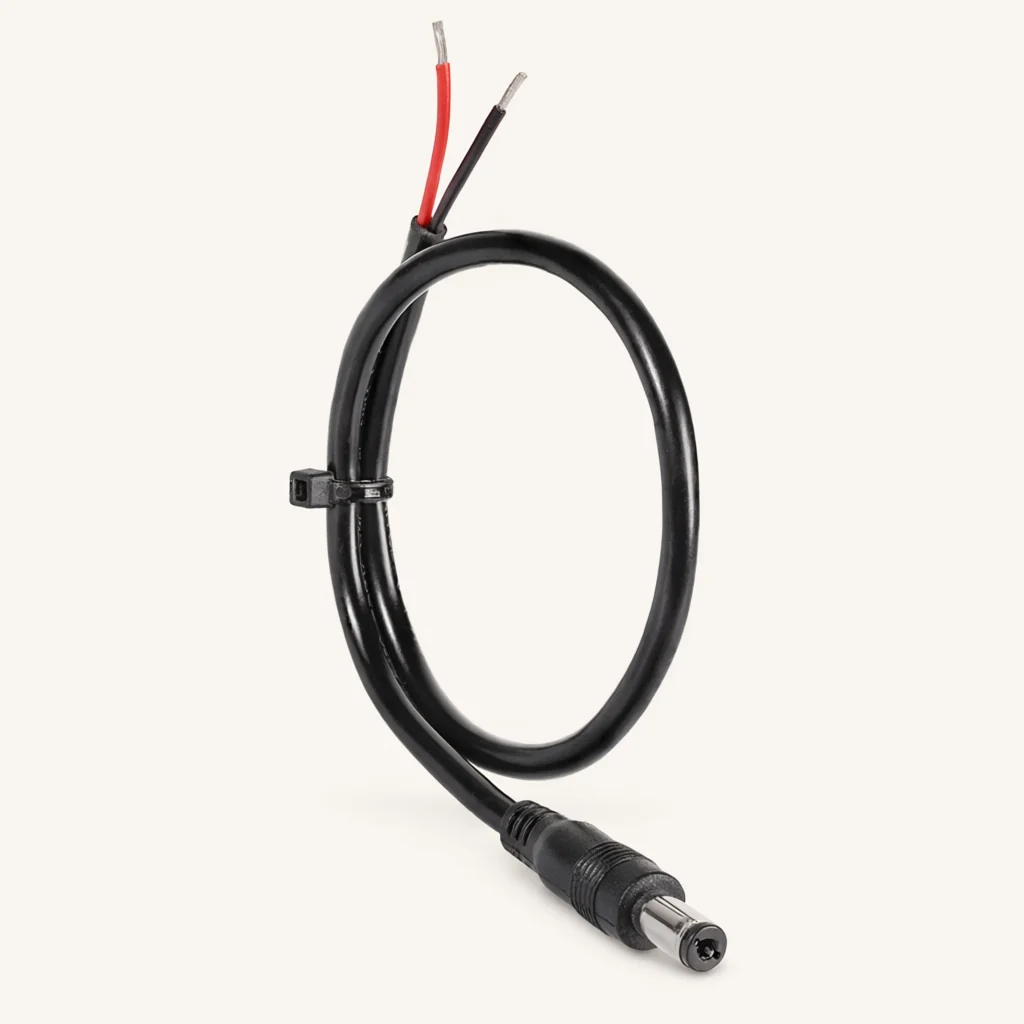
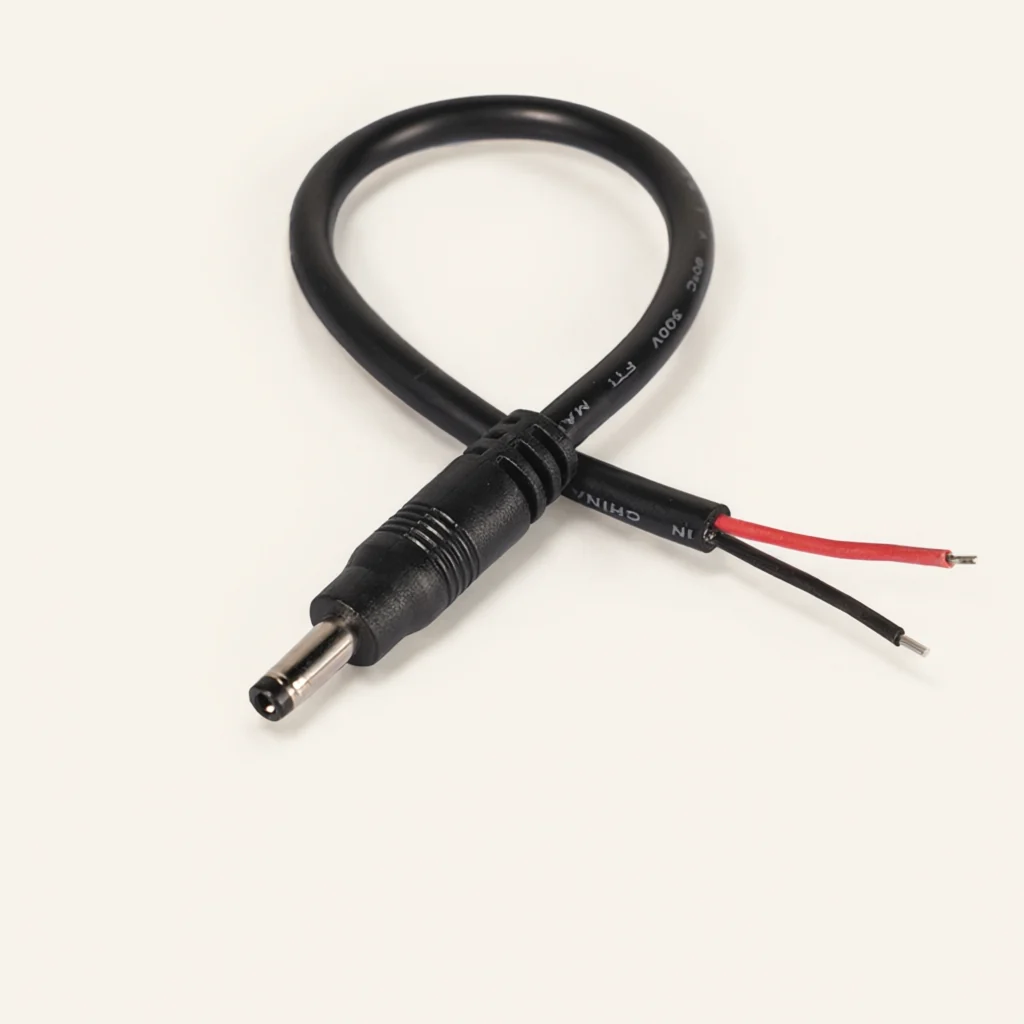
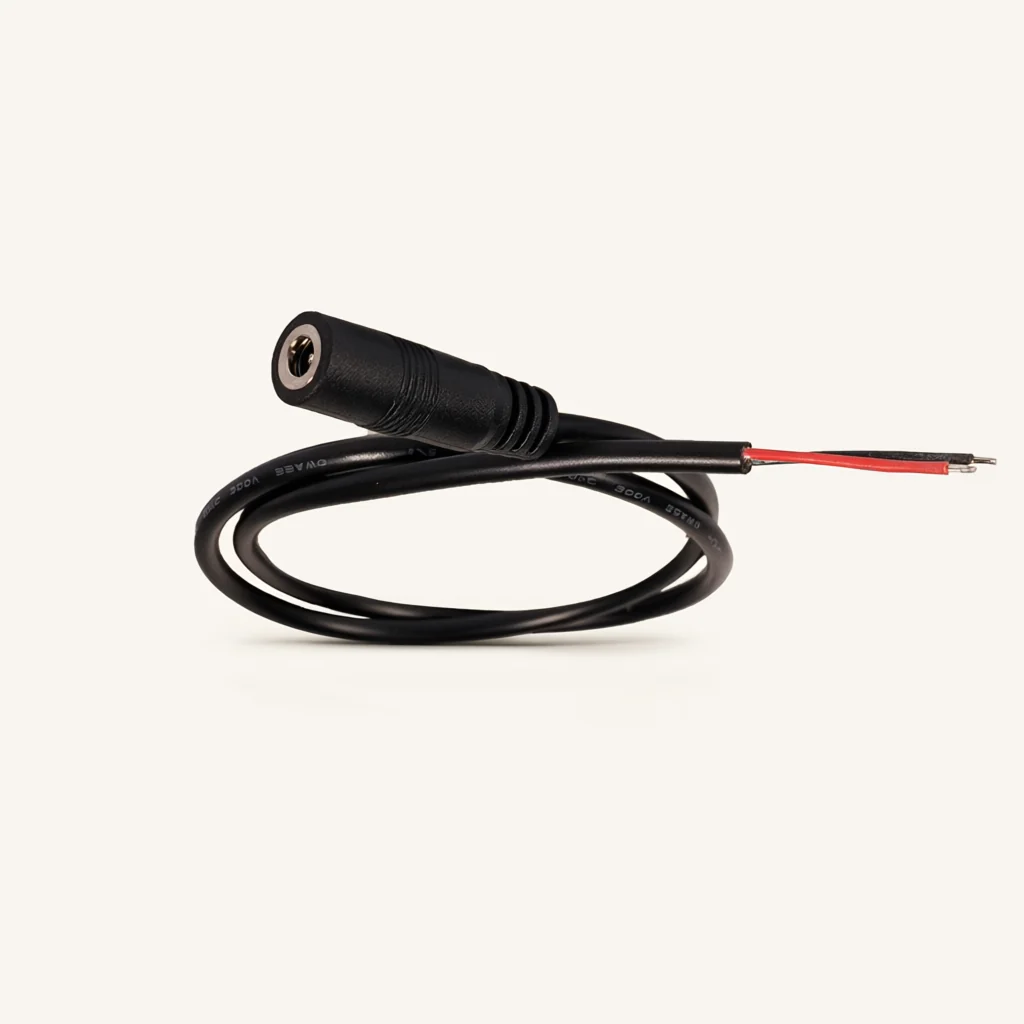
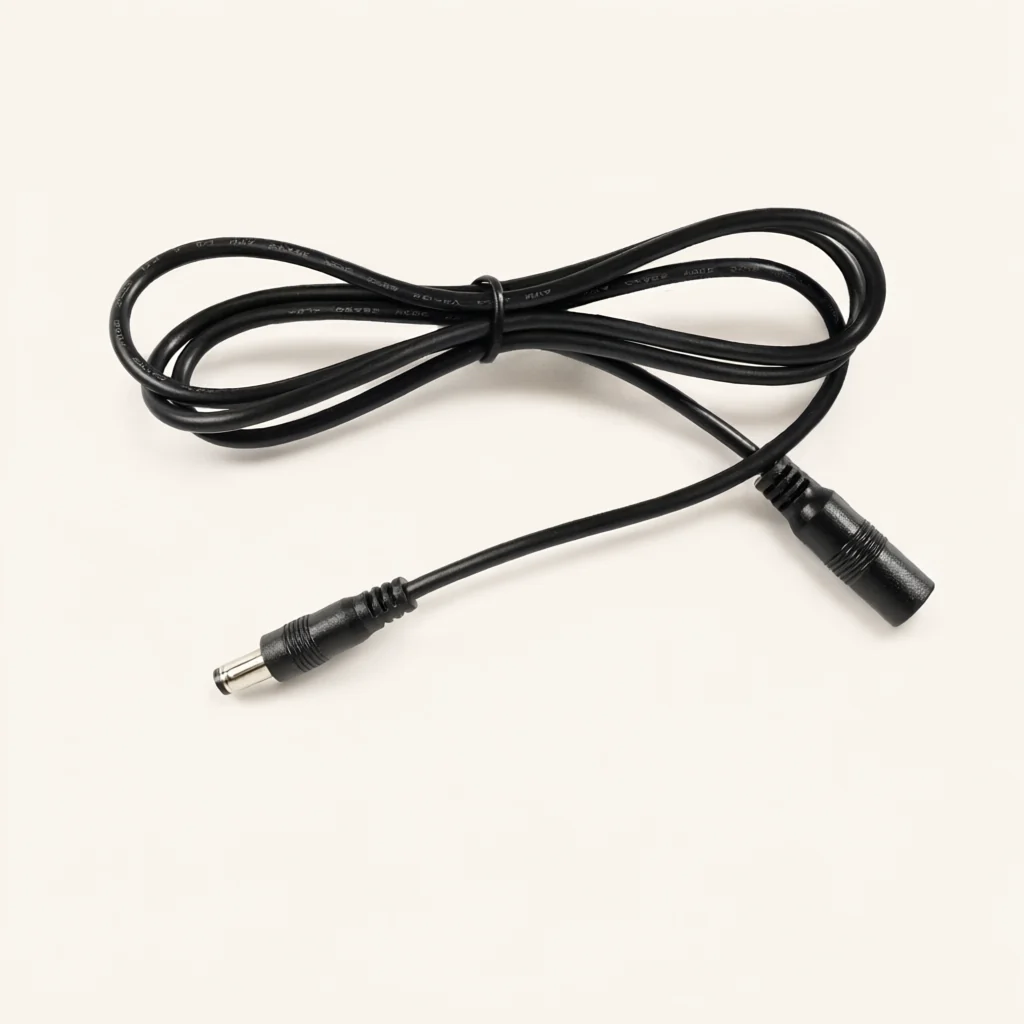
The DC cable range includes DC5525 male-to-female configurations. Its published lengths are 100, 200, 300 and 500 cm, with custom lengths also listed. Black or customized color is available within the listed series options. PVC is identified as an outer jacket material, and customization covers length, color, jacket material and packaging.
Use those choices to prepare the proposed items in your matrix. Ask for the selected combination to be confirmed for each configuration. If your project needs a jacket requirement considered beyond the listed material, describe that requirement and request a proposed choice. Keep the final material selection explicit in the quotation and approved specification.
Bulk pack, retail box and OEM box arrangements are listed packaging options. Select the type you want considered for each item or identify a shared packaging request for the group. Include the identification information your team needs, especially where several cable configurations will be received together.
| Item | Series information |
|---|---|
| Configuration | DC5525 male-to-female |
| Length choices | 100 / 200 / 300 / 500 cm or customized |
| Color choices | Black or customized |
| Jacket listed | PVC |
| Packaging choices | Bulk pack / retail box / OEM box |
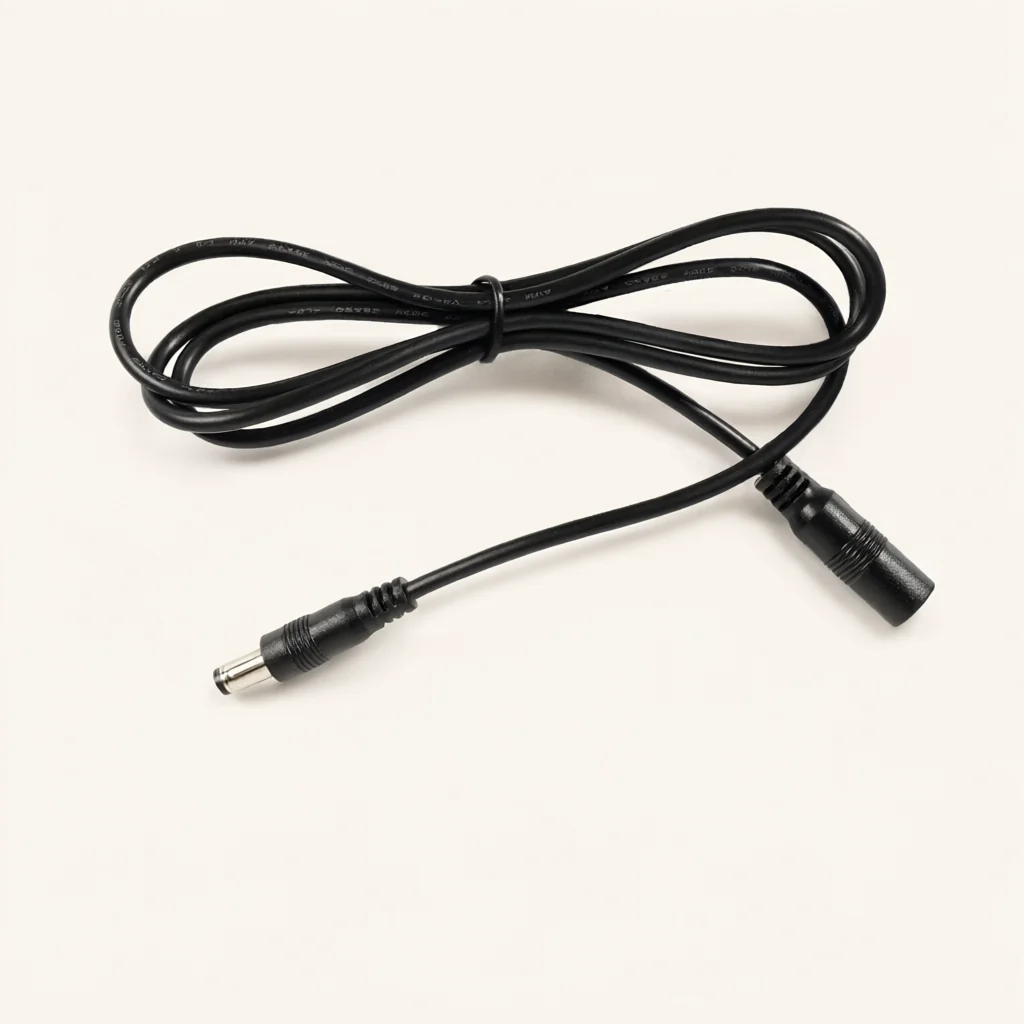
Review the two interfaces for every selected version
Identify the mating component at the male end and the mating component at the female end. Use consistent end labels on the drawing, layout and connection map. State the viewing direction of any connector view. Ask your engineering team to confirm that each equipment version is being reviewed against the correct interface references.
Prepare the intended contact relationship and polarity requirements for the complete cable. Include your project's electrical requirements and any documentation needed for the proposed construction. Keep those inputs associated with the item reference they apply to. Where all versions use a common connection map, identify that map explicitly rather than leaving the relationship unstated.
If a component changes in one equipment version, note which cable item needs a fresh review. Ask for the proposed cable description to be compared with the revised interface. Keep unaffected items identified separately so the decision for one version does not silently change the requirements of the rest of the range.
Specify route lengths with consistent measurement rules
For each equipment version, show the intended cable path between its two connection positions. Ask the layout owner to establish the required length, including any assembly position or allowance the project wants considered. Record the route reference beside the corresponding cable item in your matrix.
Use a defined pair of measurement endpoints for the cable length and state the required tolerance. If the same convention applies to every item, put it in a shared drawing note and reference it from each row. If one item uses a different convention, identify that difference explicitly so the quotations can be compared with the intended requirements.
Custom lengths are listed for the series, so submit the dimensions established by your layouts. Avoid selecting a published length solely to make every row look uniform. Where you want two alternatives compared for one equipment version, label both alternatives and identify the decision your team still needs to make.
Plan a sample review by configuration
If your team requests samples, identify which proposed cable items need review and what each review is intended to establish. Include the relevant mating interfaces, cable route and connection map. State the drawing revisions that govern the review, along with any checks or supporting documentation your project needs discussed.
Record the result for each item separately. A length accepted for one equipment layout should remain associated with that layout in the review record. If your team accepts a common feature across several items, name the items and the feature explicitly. Keep unresolved questions visible until the relevant configuration is ready for approval.
After a requested revision, update the affected row in the option matrix and the associated drawing reference. Ask for the new description to appear in the proposal. Before ordering, compare the selected configurations with the reviewed items so that purchasing does not accidentally use an earlier alternative from the development discussion.
Make packaging identification part of the inquiry
For several cable items received together, describe how you want them distinguished in the proposed packaging arrangement. Provide your item references and any grouping requirements. Ask for the packaging method to be named for each configuration, whether your request concerns bulk pack, retail box or OEM box options.
Review the proposed identification with the person responsible for receiving the items. Determine which information that person needs to compare the delivery with your purchase specification. Keep mandatory identification requirements separate from optional presentation preferences. If packaging changes after the cable is approved, state whether the cable specification itself remains unchanged.
Review quantities against the correct configuration
Before releasing the inquiry, check that each requested quantity belongs to the cable item shown in the same row. If the project includes a sample request and a later purchasing quantity, separate those stages and identify the specification status for each. A provisional layout can remain in the discussion without being mistaken for a released order requirement.
Ask the buyer to compare the item names in the inquiry with the names used in the engineering documents. Where a project nickname differs from the purchasing reference, explain the relationship once in the matrix. Use the purchasing reference on subsequent quotation questions so that a decision about one configuration is not attributed to another. Keep the preferred alternative visibly marked if your team has requested several proposals for the same equipment version.
Send a structured request for the selected items
The customization page is a starting point for describing series choices, and the DC product catalog can help your team revisit the required end arrangements. Once the configuration list is prepared, contact Huajunxin with your drawing links, option matrix and requested quantities. Specifications can also be shared by email.
Ask for each proposed item to include its selected length, color, jacket and packaging together with the commercial terms. Include any requested schedule and identify configurations that remain provisional. Before approving the purchase, compare the proposal with the latest matrix and drawings, then keep that agreed set as the reference for receiving and future inquiries.
For a later change to the equipment range, revise only the affected item descriptions and make the change clear in the next request. State whether existing items are repeat inquiries or whether their references have changed. This keeps the purchasing discussion tied to the configurations your team currently intends to use.
Frequently asked questions
Can I request multiple DC5525 male-to-female configurations?
List each requested configuration separately with its drawing reference, selected length and requested quantity. The series includes length and other customization options; ask for each proposed combination to be described clearly in the quotation.
What length choices are published?
The series lists 100, 200, 300 and 500 cm and custom lengths. Define the measurement endpoints and tolerance for your request, and link the selected dimension to the intended equipment layout.
What should stay common in a multi-item inquiry?
Identify any common interface references, connection map or measurement convention explicitly. Keep item-specific differences in the corresponding row of your request so your team can review each proposed cable against its own requirements.
Can packaging differ between the requested items?
Packaging customization is listed, including bulk pack, retail box and OEM box options. Describe the arrangement wanted for each item and ask for those choices and their identification requirements to be confirmed in the proposal.