Build the inquiry around the assembly work instruction
If the cable will be handled according to an assembly work instruction, use that instruction to identify the requirements your team wants in the proposed item. State the selected DC5525 or DC5521 connector identity and male or female configuration. Give the cable a purchasing reference and link it to the drawing that defines the wire-end connection.
Describe the intended contact assignment in a connection map rather than leaving the relationship implicit in the red-and-black colors. Include the viewing direction of the connector diagram and the destination labels used by your assembly. Ask your engineering team to approve the map that will govern the cable proposal.
Keep the product requirement separate from instructions that apply only to your own assembly process. Identify which wire-end preparation you want supplied and which steps your team intends to perform after receipt. Ask for the quotation to describe the proposed supply clearly so the boundary between the cable item and later assembly work is understood.
Listed connector, length and material choices
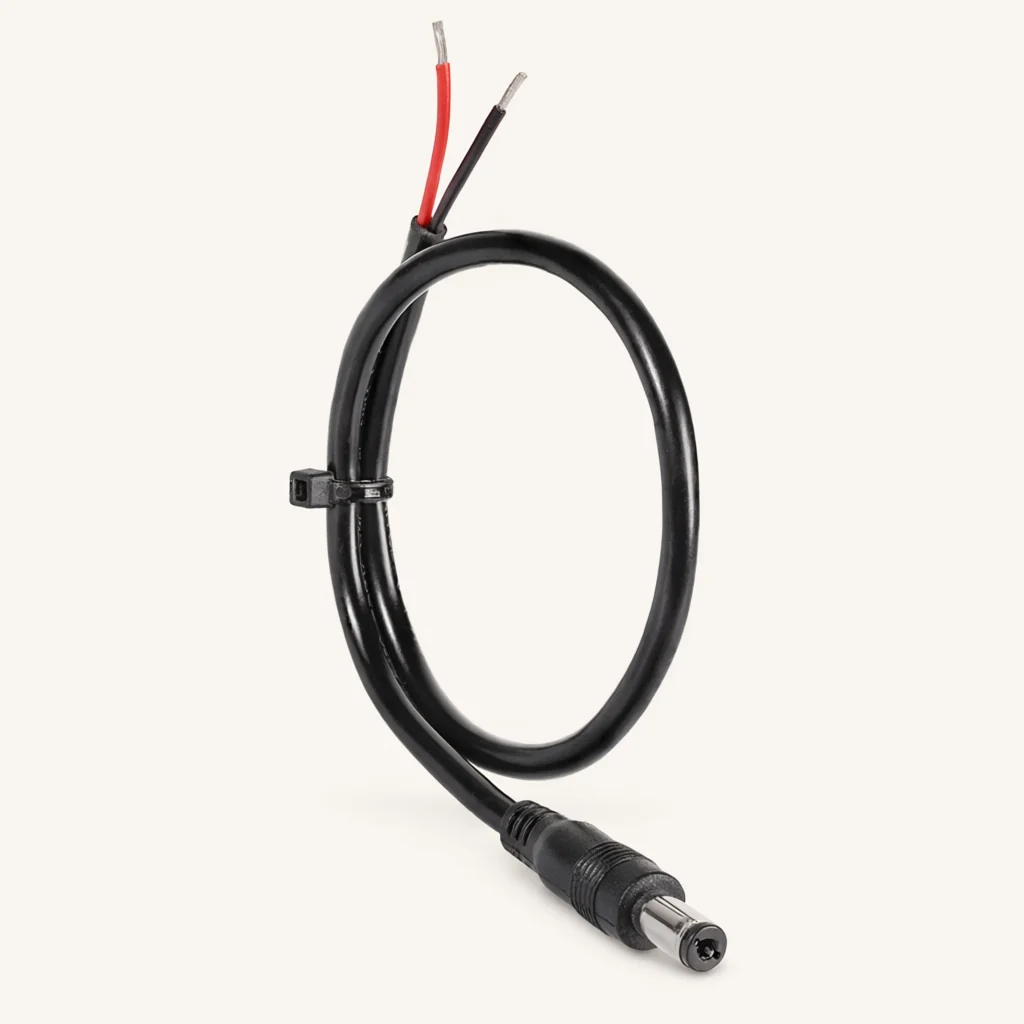
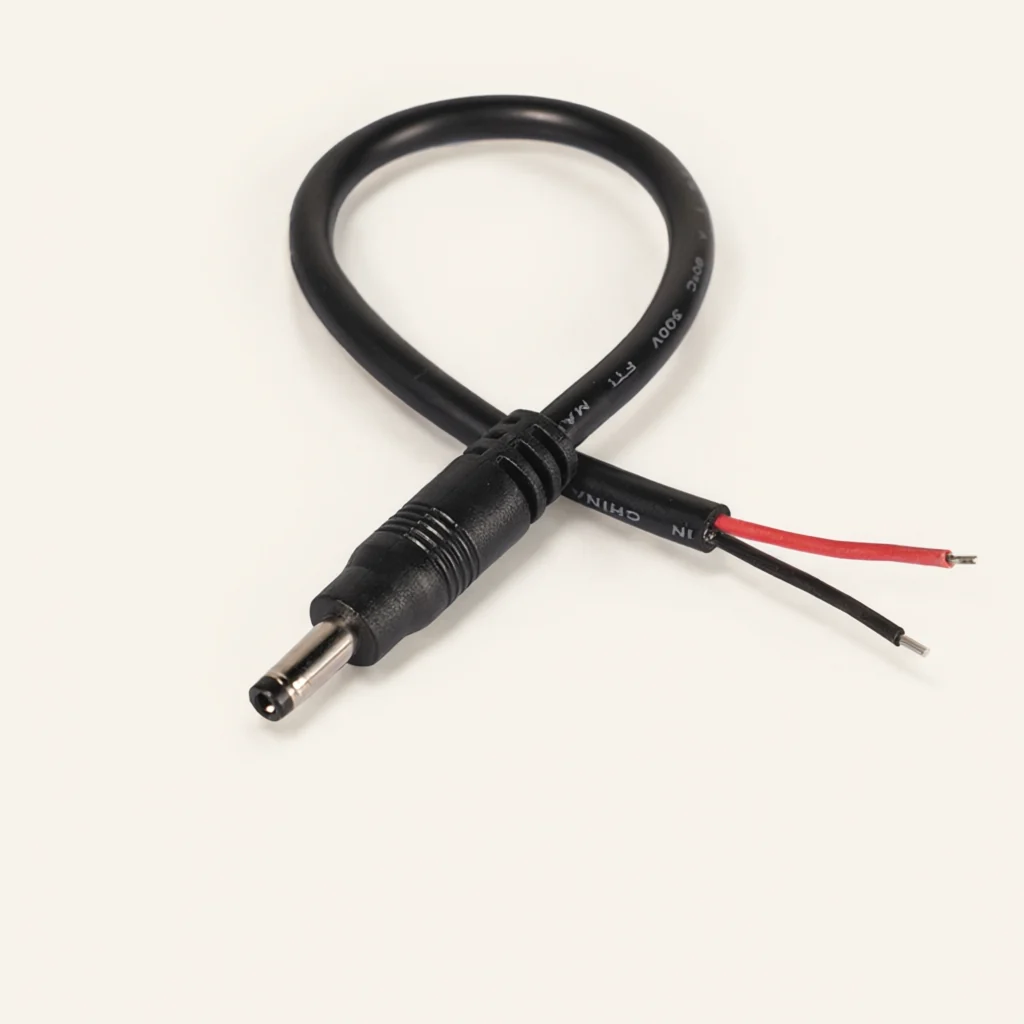
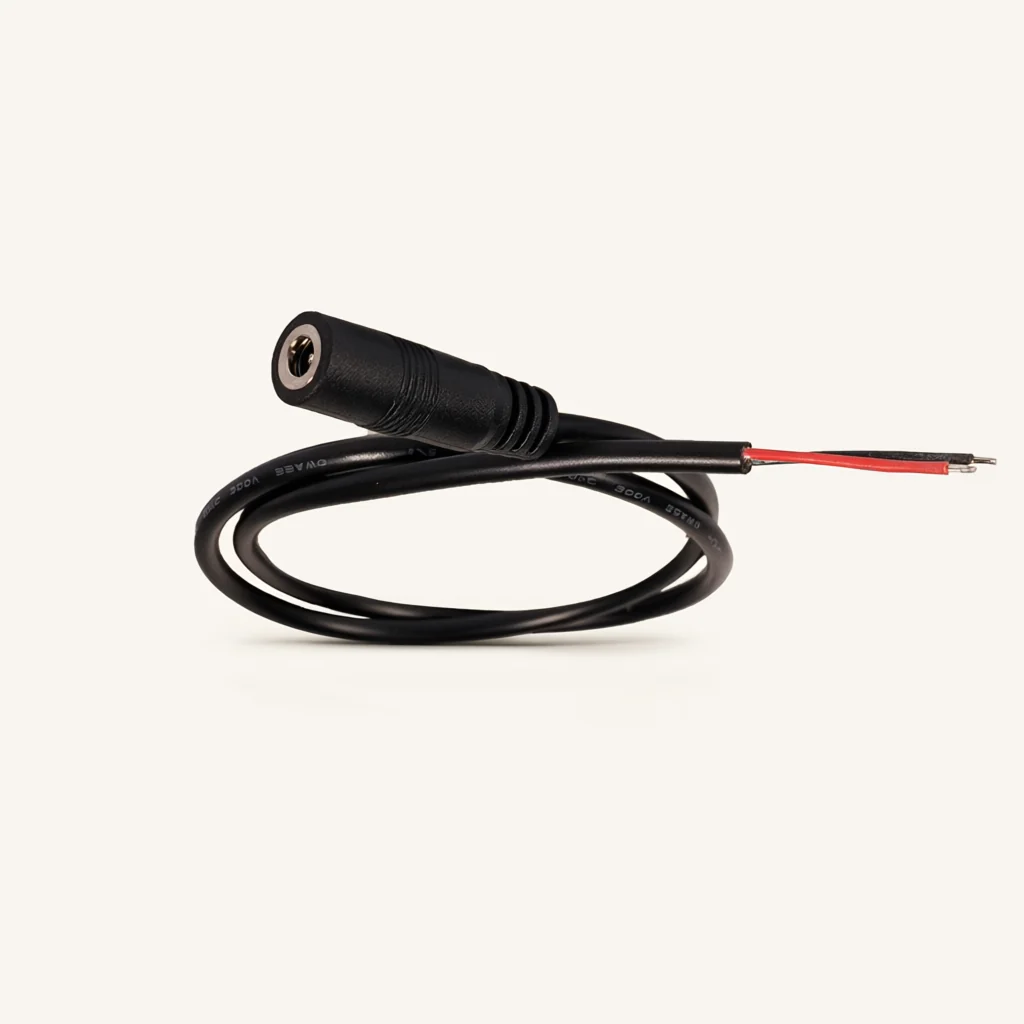
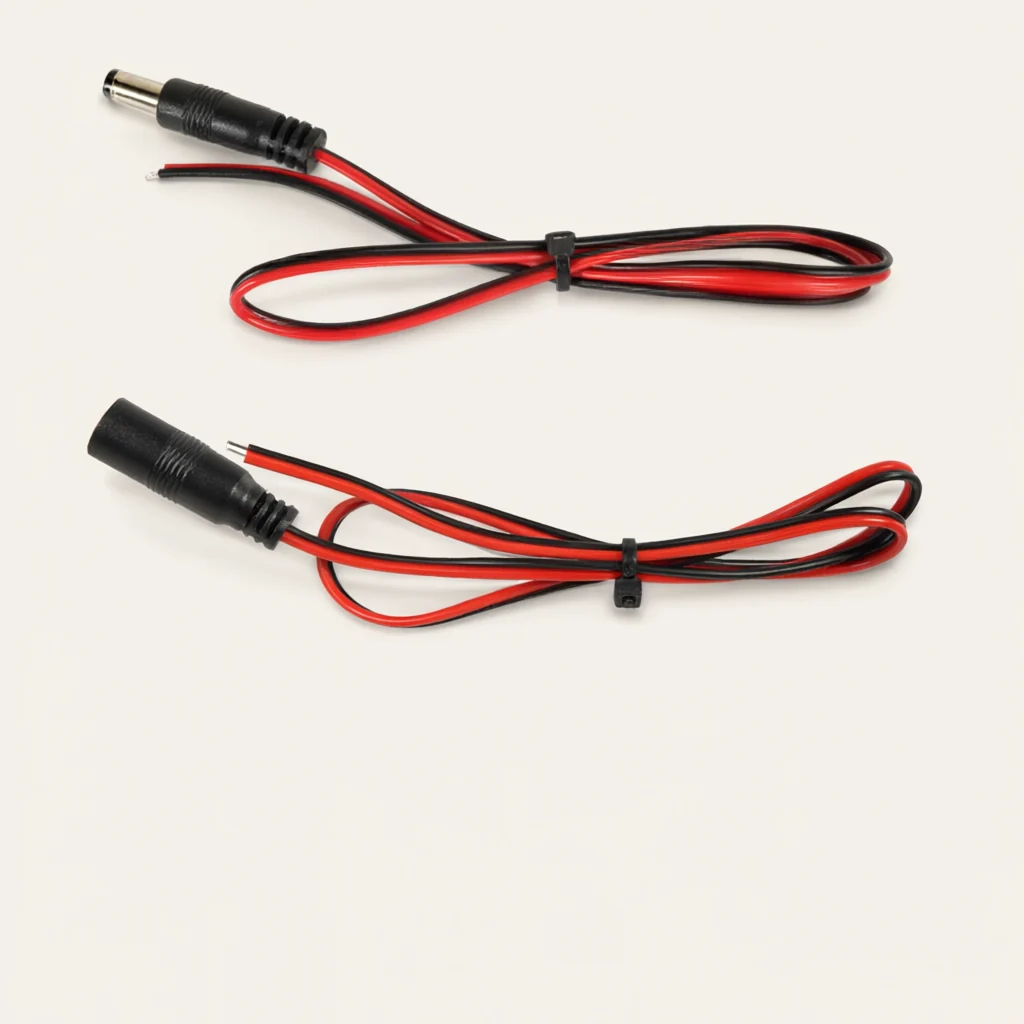
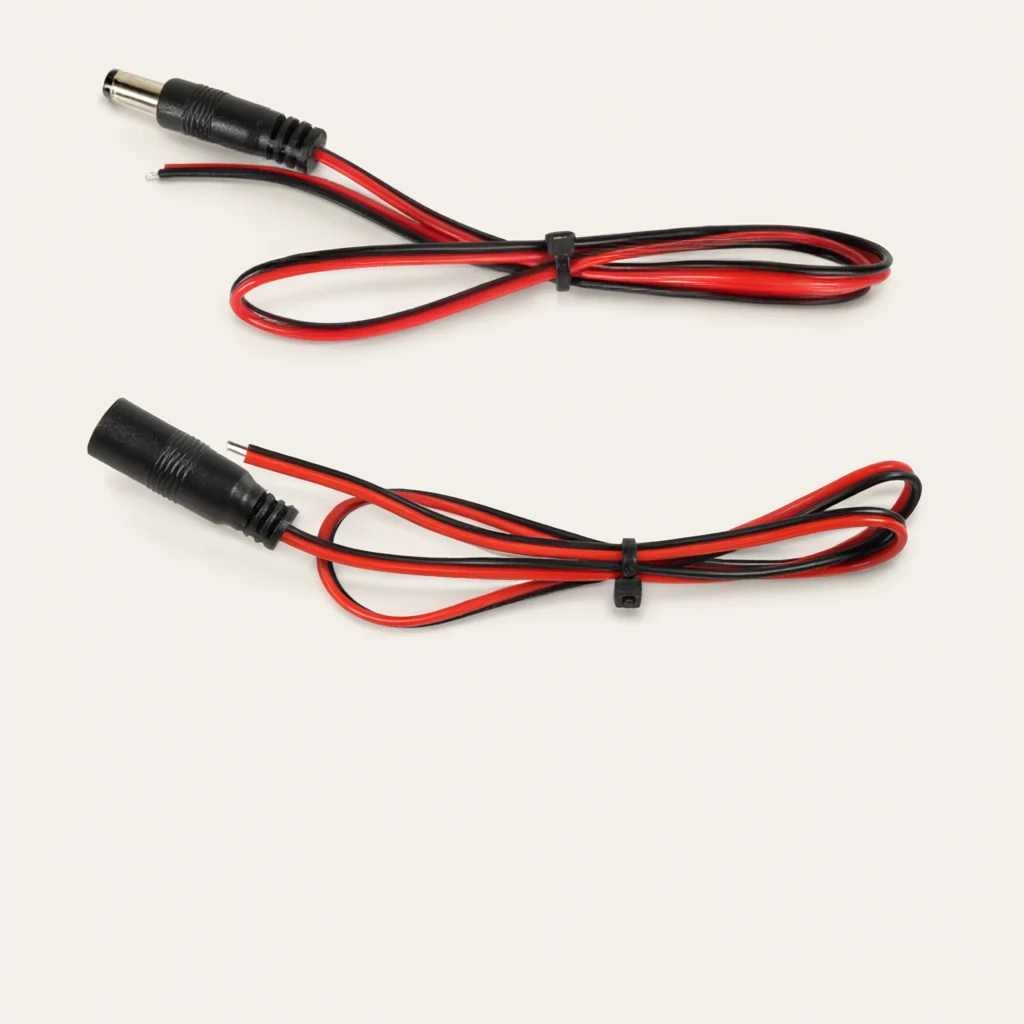
The series identifies DC5525 and DC5521 male and female connectors with red-and-black parallel wires. Cable lengths of 30, 50 and 100 cm are listed, with customized lengths also available. The listed colors are red and black, with color customization included. PVC and rubber are listed outer sheath material options.
Select one connector configuration and the length required by your assembly. State the sheath choice you want considered and identify any project requirements relevant to that selection. If a custom color request is part of the inquiry, provide the reference and explain how your team intends to review the proposed appearance.
For several cable items, identify the differences in a short configuration list. Keep connector gender, requested length and preparation requirements beside the relevant item reference. Ask for separate proposed descriptions where the requirements differ, rather than combining all choices into one general request for red-and-black DC wires.
| Item | Series information |
|---|---|
| Connector choices | DC5525 / DC5521 male or female |
| Wire identity | Red-and-black parallel wires |
| Lengths | 30 / 50 / 100 cm or customized |
| Colors | Red and black or customized |
| Outer sheath | PVC or rubber |
Write a contact-to-wire schedule your team can review
Use a diagram or table to identify the intended connection between each relevant connector contact and the wire identification required by your project. State the viewing direction and explain any symbols. Link the schedule to the same item reference as the cable drawing. Ask the engineering reviewer to check that both documents describe the same intended connection.
If your assembly uses destination names such as an internal terminal reference, include the meaning of those names or the relevant drawing. Keep destination labels consistent with the work instruction. Ask for the proposed cable to be reviewed against the contact-to-wire requirement, while your team confirms how that requirement connects to the rest of the assembly.
Provide the operating requirements of the complete intended assembly and identify any supporting documents your purchasing process needs. Ask for the proposed construction to be described against those inputs. Keep unresolved technical questions visible in the inquiry before the cable item is approved for purchase.
Define the wire-end preparation with dimensions
Describe the connection method your team intends to use at the wire end. Ask what preparation can be supplied for the proposed construction and show the dimensions your process requires. Identify any termination or mating-component reference needed to explain the request. Keep the specified preparation attached to the selected connector configuration.
If your process needs a particular separation between the wires or a defined prepared section, show that requirement on the drawing with measurement endpoints. State the tolerance your team requires and ask for it to be reviewed. Mark any undecided detail as an open question rather than leaving a blank that could be interpreted as an approved dimension.
A useful buyer instruction might say, 'Please quote the selected cable against the linked contact map and wire-end drawing, and identify any preparation detail that needs clarification.' This is a format for the request. Supply your own dimensions, selected connector, drawing revisions and requested quantity to make the inquiry specific.
Set the cable length from the assembly route
Mark the connector position and the intended wire-end destination on the assembly layout. Draw the cable path your team wants considered, including any position used during assembly. Ask the layout owner to establish the required length and any allowance from that route. Keep those decisions on the drawing instead of adding an unexplained amount to the requested dimension.
Define the points used to measure the cable length and state the required tolerance. If an existing cable is the reference, record its measurement convention and identify whether you want that convention retained. Link the selected dimension to the current item revision so your buyer can compare the proposal with a clear requirement.
The series lists custom lengths alongside 30, 50 and 100 cm. Submit the dimension required by your assembly and ask for the selected connector, sheath and preparation combination to be confirmed. For different equipment versions, use separate item references and keep the corresponding route drawing beside each requested length.
Use the work instruction to prepare a focused RFQ
Begin the inquiry with the selected cable identity and your item reference. Link the connection map, wire-end drawing and route drawing, with the current revision of each document. State which requirements are approved and which still need discussion. This gives the proposed cable a complete brief without requiring the buyer to infer technical choices from the equipment name.
Add the selected series options and requested quantity. If your team wants more than one configuration compared, identify each alternative and explain what differs. State the question that the comparison is intended to answer, such as a length decision still under review, and keep the preferred configuration visible if one has been selected.
Use the customization page to organize length and color questions, or share the specification links through contact. You can also send the documents by email. Include any requested schedule and explain whether the current request is for an initial proposal, a sample stage or a quotation against a released specification.
Review a sample against the preparation and connection requirements
If a sample is requested, identify the requirements your team intends to evaluate. Include the mating interface, contact-to-wire schedule, cable length and wire-end preparation. Provide the document revisions used for review and discuss any checks or supporting records required by your purchasing process.
Ask the assembly reviewer to record each decision against the relevant requirement. An accepted appearance does not close a dimensional question in the review record; keep the entries separate until your team has made its decisions. Where a change is requested, identify the affected dimension, map or preparation feature and ask for an updated proposal.
Before purchase approval, compare the resulting item description with the work instruction and cable drawing. Check that the proposed supplied preparation is clearly distinguished from the steps your own team intends to perform. Retain the agreed description so the person placing the order uses the same configuration that was reviewed.
Keep cable identification aligned with your internal documents
Ask your receiving and assembly teams which item information they need to identify the proposed cable. Include that request in the inquiry and ask how it can be addressed in the proposed supply. Keep the purchasing reference consistent across the quotation, drawing and work instruction, especially if similar cable configurations are used elsewhere in the project.
For a later revision, state what changes and what remains the same. If the wire-end preparation changes while the connector identity stays fixed, identify the new drawing revision and ask for the proposal against it. Keep earlier alternatives distinguishable from the current specification so a repeat request does not accidentally restore an obsolete requirement.
Before sending a revised inquiry, compare the labels in the contact map with those used in the assembly instruction. Resolve any mismatch and give the buyer the current links. If another team controls one reference, identify who will provide its approval. Keep the purchasing decision focused on the complete set of requirements that is current for the intended equipment version.
Request the selected red-and-black pigtail configuration
The DC product catalog can help your team revisit the connector configuration if the required interface changes. When the item is selected, send the connection map, preparation drawing, length requirement and requested quantity. Ask for the proposed configuration and commercial terms to be confirmed together.
Before ordering, compare the quotation with the latest cable specification. Confirm the selected connector, length, sheath, colors and wire-end requirements. Keep the agreed item reference with the approved work instruction for receiving and assembly review, and identify any future change explicitly in the next inquiry.
Frequently asked questions
Which connector configurations are listed?
The series identifies DC5525 and DC5521 male and female connector choices with red-and-black parallel wires. State the configuration required by your project and provide its mating reference for review.
Should the wire assignment be included even when colors are specified?
Include the intended contact-to-wire relationship in a written map, with polarity requirements and a stated viewing direction. Ask your engineering team to approve that map as part of the proposed cable specification.
Which length and sheath options can I discuss?
The series lists 30, 50 and 100 cm and custom lengths, with PVC or rubber outer sheath options. Red-and-black colors and color customization are listed. Select the combination you want reviewed for your item.
How do I request a prepared wire end?
Describe the intended connection method and show the required preparation dimensions in the drawing. Ask which preparation can be supplied for the proposed construction and identify any detail that still needs agreement before ordering.