Define direction and wire assignment as separate requirements
This product inquiry involves two different descriptions: where the angled connector sends the cable in your layout, and how your project intends the wires to be connected. Show both. Use a labeled assembly view for the requested exit direction and a separate connection map for contact assignment. Keep the same item reference on both documents so the proposal can be reviewed against the complete cable requirement.
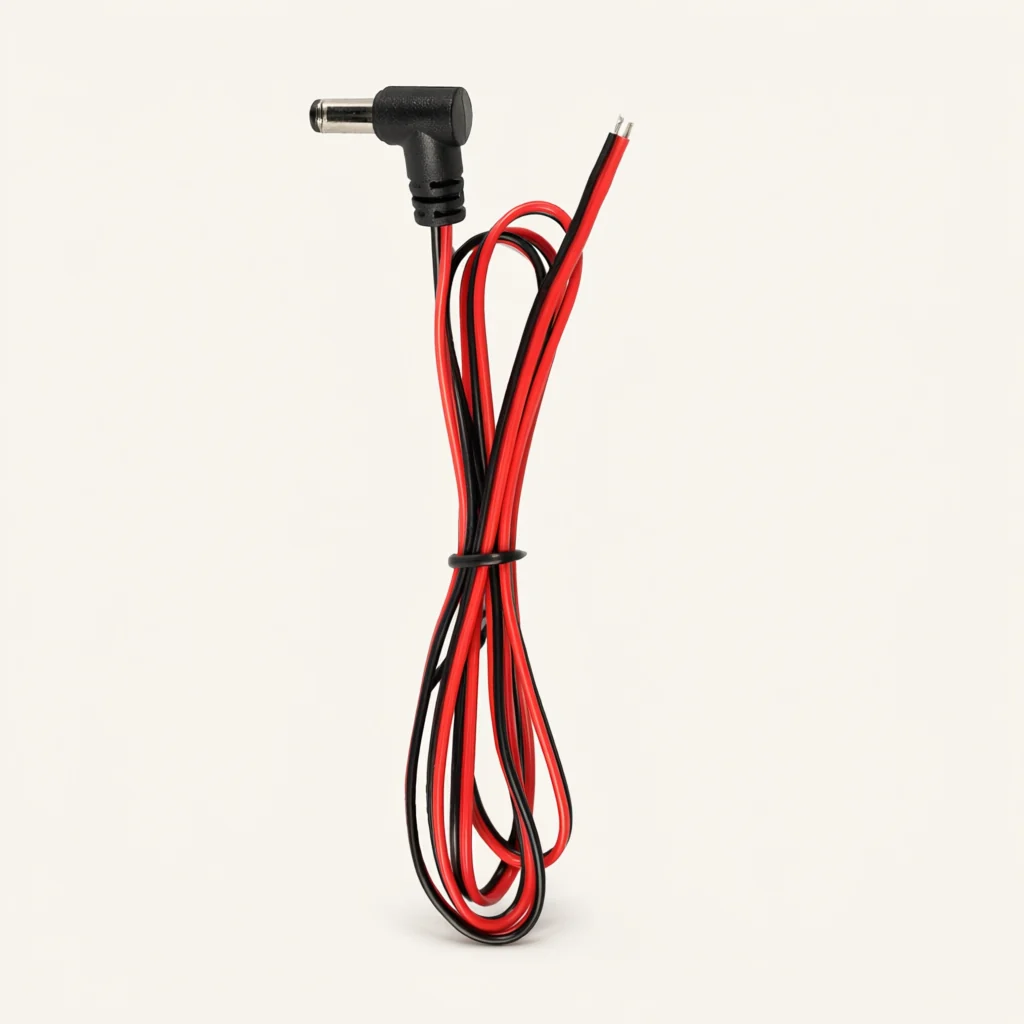
Select the angled male connector identity your project requires from the listed DC5525, DC5521, DC4017 and DC35135 choices. Include the mating-part reference and request the proposed dimensions needed by your team. Describe any nearby assembly features that need consideration in the layout review, with a stated viewing direction for each relevant sketch.
For the connection map, identify the intended relationship between contacts and wires explicitly. Include polarity requirements and the viewing direction of connector diagrams. Keep those instructions written down even when your project uses red and black wire colors. Ask your engineering team to approve the map that governs the proposed item.
Series construction and selection choices
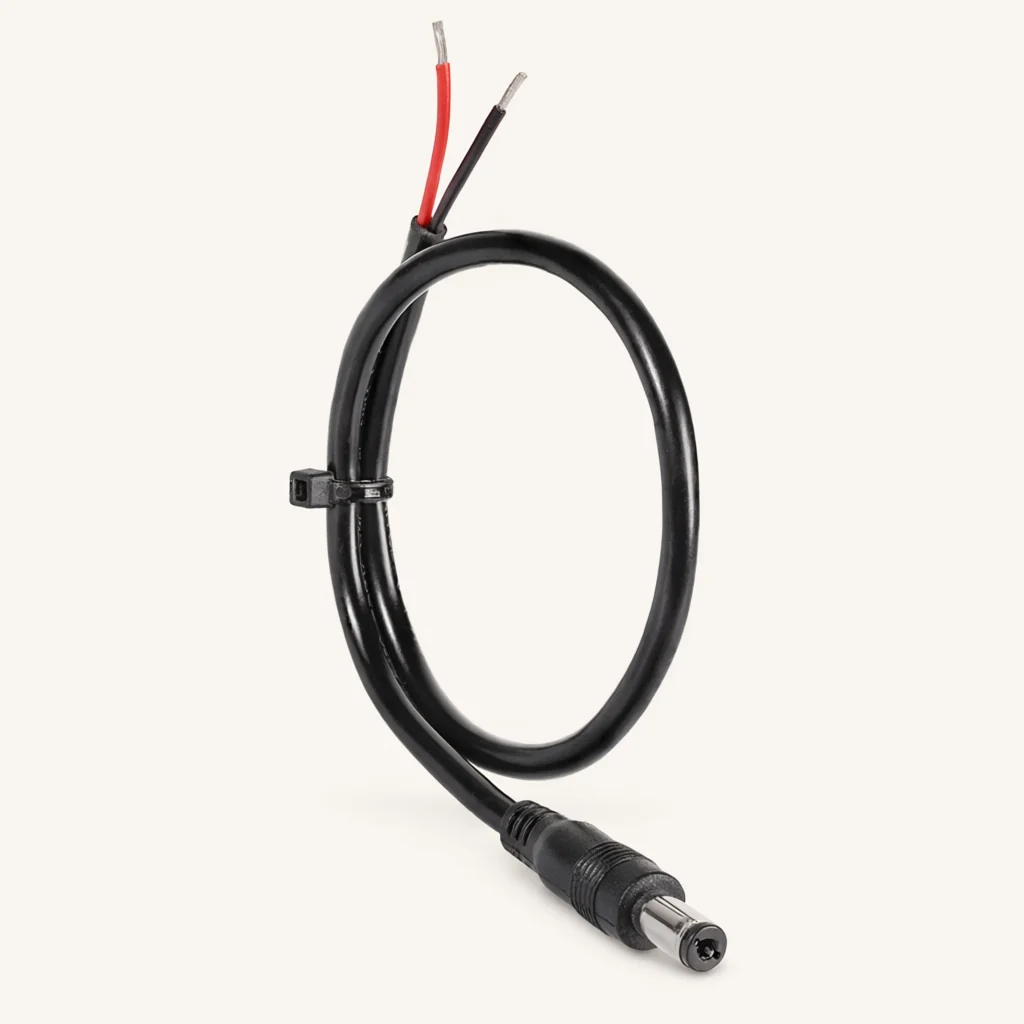
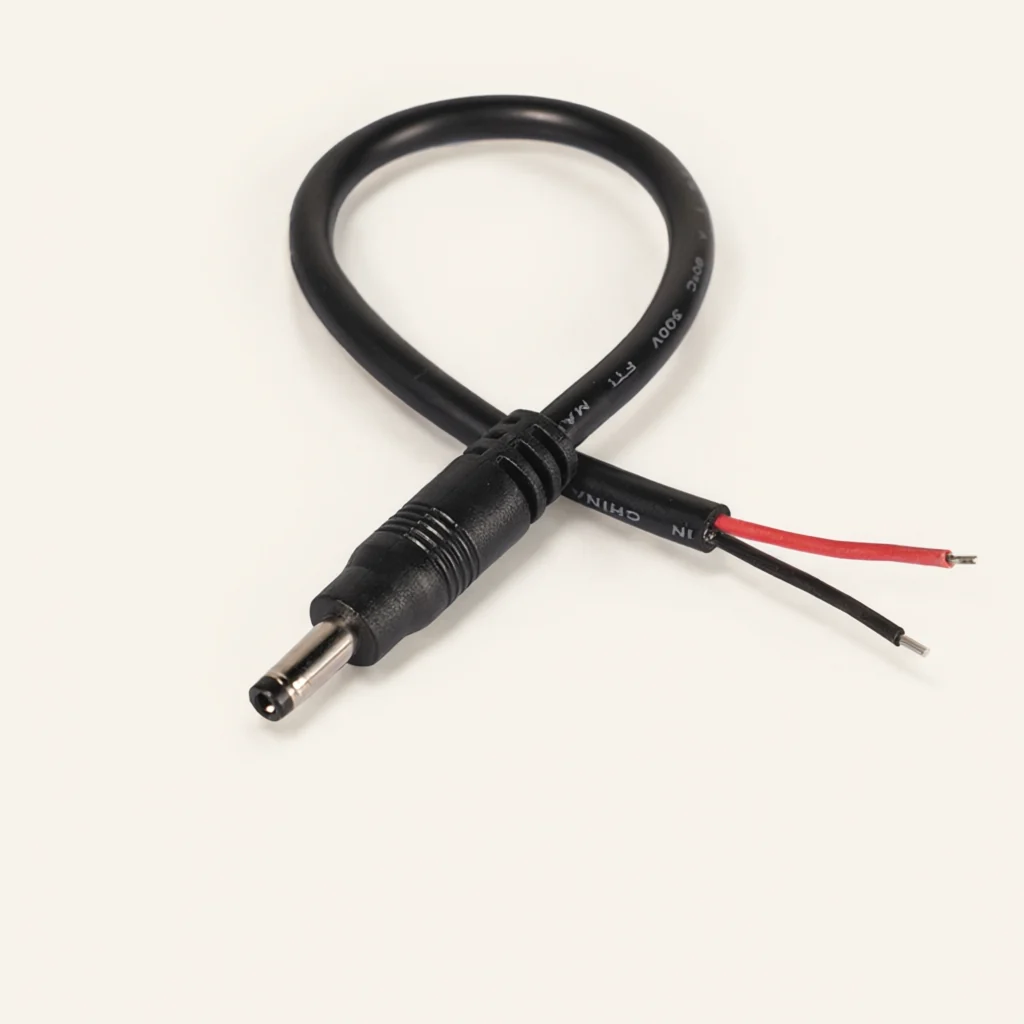
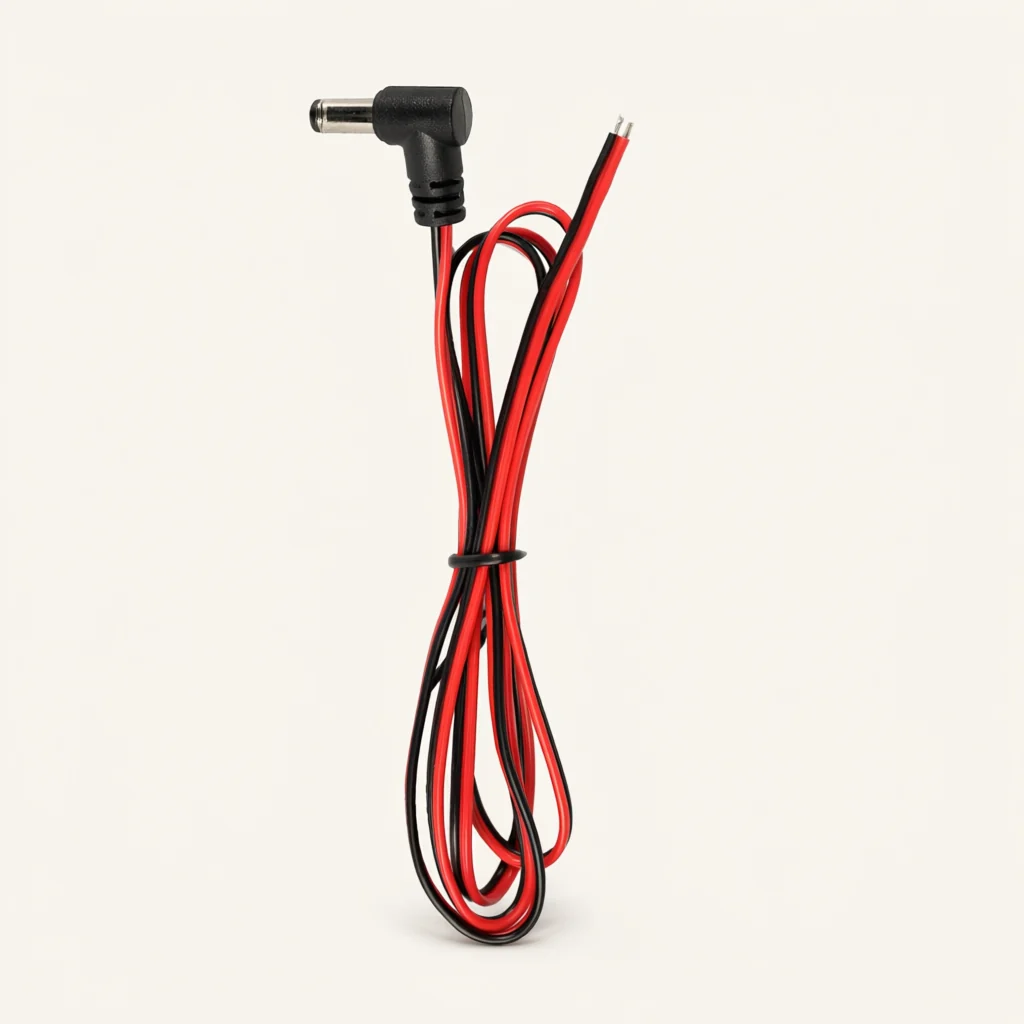
The listed product series is red-and-black parallel wire with an angled male plug. Cable length choices are 30, 50 and 100 cm, with customized lengths available. Red and black are the listed wire colors, with color customization also included. PVC and rubber are listed outer sheath material options.
Use those choices to prepare one selected configuration for the quotation. State the connector identity, requested length, color requirement and sheath choice. If a choice needs further discussion, identify the requirement your team wants considered and ask for the proposed option to be described. Keep alternative configurations separate from the primary item.
For equipment versions that use different directions or lengths, give each proposed cable an item reference. State which requirements remain common and which change. Ask for the proposal to identify those configurations separately so your purchasing team can compare them against the corresponding assembly drawings.
| Item | Series information |
|---|---|
| Construction identity | Red-and-black parallel wire with angled male plug |
| Connector choices | DC5525 / DC5521 / DC4017 / DC35135 |
| Lengths | 30 / 50 / 100 cm or customized |
| Colors | Red and black or customized |
| Outer sheath | PVC or rubber |
Show the angled connector in the equipment view
Mark the intended connector position and cable direction on the layout. Identify the viewing direction and the reference features used to describe it. If your instruction uses left, right, up or down, tie that word to the labeled view. Ask for the proposed connector drawing needed to review the direction against the actual mating interface.
Include the surrounding features your assembly team wants considered. Ask which dimensions are needed to complete the review and identify any that remain open. Where the layout is provisional, state that status and the decision required before the cable arrangement can be finalized. Keep the proposed cable item connected to the current equipment revision.
A buyer's instruction might say, 'Use the selected angled male identity and review the cable direction against view A of the linked assembly drawing.' This is a request example. Add your actual connector choice, mating reference and labeled view. Keep the electrical connection map as a separate linked requirement rather than embedding it only in an appearance photograph.
Make the red-and-black connection map explicit
Describe the intended wire assignment in a small connection table or diagram. Identify the relevant connector contact, the required wire identification and the destination in your assembly. State the viewing direction of the connector representation. Ask your engineering team to review that mapping before the item is released for quotation or purchase.
If your assembly instructions use their own wire names or terminal labels, explain those names in the inquiry. Keep them consistent between the connection map and the wire-end drawing. Ask for the proposed cable description to refer to the approved map, so the purchasing decision has a clear connection requirement rather than an assumption based only on colors.
Provide the electrical requirements of the complete assembly and identify any documents needed for review of the proposed construction. Keep those requirements associated with the selected connector and cable item. Where a requirement remains undecided, mark it as an open engineering question and request the information your team needs to resolve it.
Specify the route and the preparation at the wire end
Show the intended cable path from the angled connector to the wire-end position. Ask the layout owner to establish the required length and any assembly allowance from that route. Include any temporary position that your process needs considered. Keep the requested dimension tied to the selected cable direction rather than treating length as an unrelated number.
Define the measurement endpoints and required tolerance. Custom lengths are listed alongside the named series options, so submit the dimension your route requires. If you want alternative lengths quoted, identify the corresponding layout or decision for each one. State whether the connector identity and direction should remain common across those alternatives.
At the wire end, describe the intended connection method and ask which preparation can be supplied for the proposed construction. Provide the dimensions and mating references your process needs. If your assembly requires a particular separation or termination detail, show it as a requirement for review and ask for the proposed arrangement to be described in the quotation.
Prepare the inquiry as a two-drawing brief
A useful request can link one drawing for physical arrangement and another for electrical connection. Give both the same cable item reference and identify their current revisions. State the selected connector and series options in the inquiry message, then list the open questions that relate to each drawing.
For example, your brief can ask for a proposal against the marked exit direction while referring to a separately approved wire assignment. Keep any requirement that has not yet been decided clearly provisional. The example is a way to organize the request; your own drawings must supply the actual direction, contact relationship, dimensions and requested preparation.
Share the drawing links through contact or send the specification by email. The customization page can help organize the listed length and color choices. Include the requested quantity and any schedule you need considered, with a clear statement of whether the current request concerns a sample or an order proposal.
Review physical arrangement and connection separately
If a sample is requested, prepare one review entry for connector direction and route, and another for the intended connection map. Add separate entries for length, wire-end preparation and appearance. Identify the document revision governing each entry. Ask your team to record accepted details and requested revisions against those specific requirements.
Discuss any checks and supporting records that your purchasing process requires. If your team accepts the physical arrangement while a wiring question remains open, keep that distinction visible. Ask for an updated proposed description when the question is resolved, and compare it with the complete specification before approving the item.
For a later equipment revision, state whether the change affects direction, route, wire assignment or more than one area. Retain clear references to the current drawings. Ask your team to review the affected cable requirements before using an earlier approval as the basis for another purchase.
Keep documents clear for the assembly team
Before sending the final inquiry, compare the wire names and connector views across all linked documents. Ask your team to resolve conflicting labels or viewing directions. Keep one selected arrangement in the active brief, with any alternative proposals clearly separated. The person placing the order should be able to identify the intended cable without reconstructing the design discussion.
Consider which item identification your receiving and assembly teams need for the proposed cable. Include that request in the inquiry and ask how it will be addressed in the proposed supply. Keep the purchasing reference associated with the selected configuration, especially if similar cable items are being discussed for other equipment versions.
Request the selected red-and-black angled configuration
Use the DC cable catalog to revisit the product identity if your interface requirement changes. Once the selected arrangement is clear, send the two drawing references, chosen length, sheath requirement and requested quantity. Ask for the proposed configuration and commercial terms to be confirmed together.
Before placing the order, compare the quotation with the current physical and connection drawings. Confirm the selected connector, cable direction, length, colors and wire-end requirements. Retain the agreed description for future requests and identify any later changes explicitly, with the affected drawing revision included in the next inquiry.
Frequently asked questions
Which angled male connector identities are listed?
The series lists DC5525, DC5521, DC4017 and DC35135. State the selected identity and provide the mating-part reference plus the drawing view that defines the intended cable direction.
How should red and black wires be specified in the connection map?
State the intended contact-to-wire relationship explicitly, including polarity, viewing direction and any destination labels used by your assembly. Ask your engineering team to approve that map as part of the cable requirement.
What length and material choices are listed?
The series lists 30, 50 and 100 cm and custom lengths, with PVC or rubber outer sheath options. Red-and-black wire colors and color customization are also listed. Confirm the selected combination for your item.
What should I review if the cable direction changes?
Identify the affected layout view, route and dimensions. Ask your team to review the proposed physical arrangement and state whether the connection map remains unchanged. Keep both current references in the revised inquiry.